Deep-sea archaeology is becoming a new proposition and challenge for China’s manned deep diving.
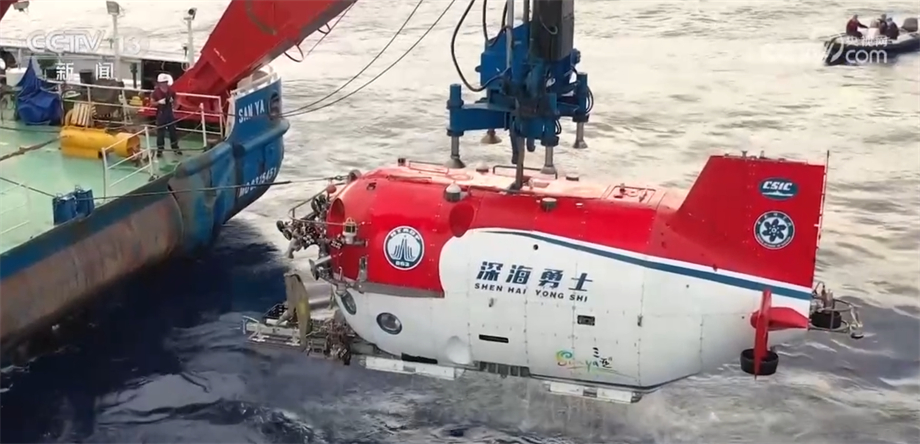
CCTV News:Yesterday (June 16th), the manned submersible "Deep Sea Warrior" completed its 577th dive mission and returned with the scientific research ship "Exploration 1". So far, the first phase geophysical survey for the sunken ships No.1 and No.2 on the northwest slope of the South China Sea has been successfully completed. Today, the Deep Sea Institute of China Academy of Sciences unveiled some scientific and technological means that play an important role in archaeological work for the first time.
According to reports, the mission was jointly participated by the manned deep diving team of China Academy of Sciences, National Cultural Heritage Administration Archaeological Research Center and archaeological experts from Nanhai Museum in China.
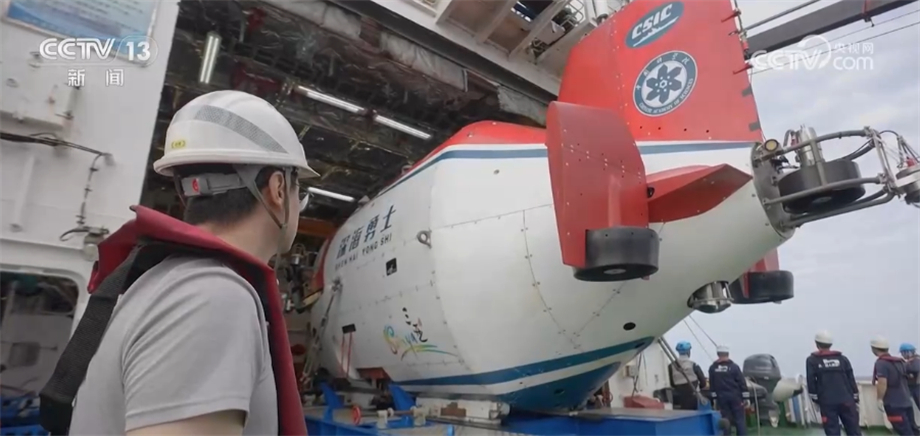
The manned deep diving team of the Deep Sea Institute of China Academy of Sciences used bathymetric side scanning, three-dimensional laser scanning and photographic image stitching to delineate the global distribution range of the shipwreck site area and obtain three-dimensional fine images of the core area of the shipwreck.
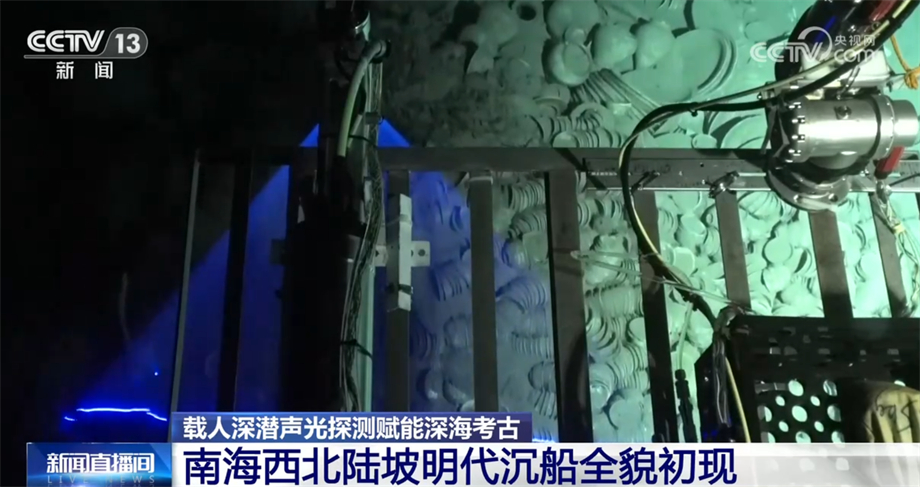
Chen Chuanxu, Deputy Director of Science Department, Institute of Deep Sea Science and Engineering, China Academy of Sciences:According to the requirements of underwater archaeological operations, it is necessary to carry out global high-precision positioning and three-dimensional reconstruction of all cultural relics in the shipwreck site area. In the deep sea of 1500 meters, this poses a new challenge to our previous underwater positioning and measurement technology. To this end, we upgraded the manned submersible platform and the ability to detect loads, and integrated the information of the submersible’s position, attitude, speed, synchronous clock and so on into the three-dimensional laser scanning equipment for cruise three-dimensional high-precision mapping.
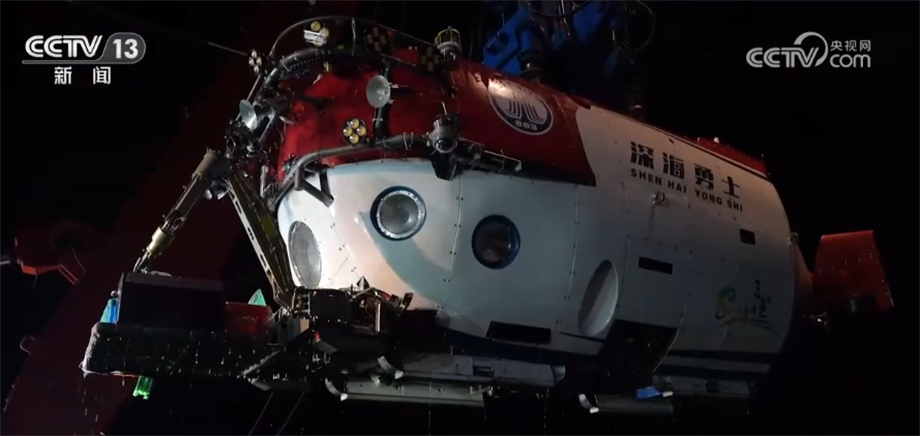
The manned submersible "Deep Sea Warrior" equipped with 3D laser scanning is a new type of underwater surveying and mapping technology. With the method of high-speed laser scanning measurement, the coordinates of each point in the shipwreck site area can be obtained with high resolution, and a large number of 3D point cloud models of cultural relics can be quickly reconstructed.
Deep-sea Archaeology: New Propositions and Challenges of China’s Manned Deep Dive
It is understood that since the discovery of the No.1 and No.2 shipwrecks on the northwest slope of the South China Sea in October 2022, the Deep Sea Institute of China Academy of Sciences has carried out 30 manned deep dives in the shipwreck site area. According to the requirements of archaeological work, it is a new proposition and challenge for China to carry out global positioning, three-dimensional reconstruction, high-definition shooting, careful observation, environmental sampling and nondestructive extraction of some cultural relics.
Deep-sea archaeology is different from conventional seabed exploration and sampling operations, and it puts forward higher requirements for manned deep diving and related deep-sea technologies, that is, accurate mapping, precise operation and ultra-high definition video recording.
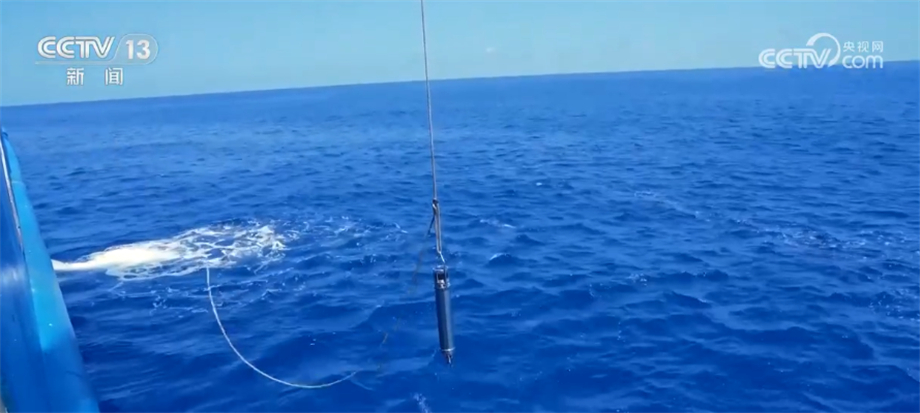
Chen Chuanxu, Deputy Director of Science Department, Institute of Deep Sea Science and Engineering, China Academy of Sciences:How to drive a 9-meter-long and 3-meter-wide manned submersible along a straight line for 500 meters in the dark 1500-meter deep seabed with a deviation of less than 1 meter — 2 meters, this is the first problem we face. This not only requires the submariner to have superb control skills, but also puts forward higher requirements for the accuracy and stability of underwater positioning system and navigation. By introducing the long baseline underwater positioning system, the update rate of underwater position is increased from 60 seconds to 3 seconds, which provides a navigation reference for the submarine navigation without delay.
Deng Yuqing, a submariner at the Institute of Deep Sea Science and Engineering, China Academy of Sciences:How to extract precious, fragile porcelain, metal ware and other cultural relics intact from the 1500-meter seabed to the laboratory is another difficult problem we are facing. We upgraded the manipulator with experts from Shenyang Institute of Automation, China Academy of Sciences and Beihang University, replacing the traditional mechanical gripper made of rigid materials with the gripper made of flexible materials, which can not only ensure the stable extraction of underwater cultural relics, but also ensure that precious information such as patterns on the surface of cultural relics are not worn.
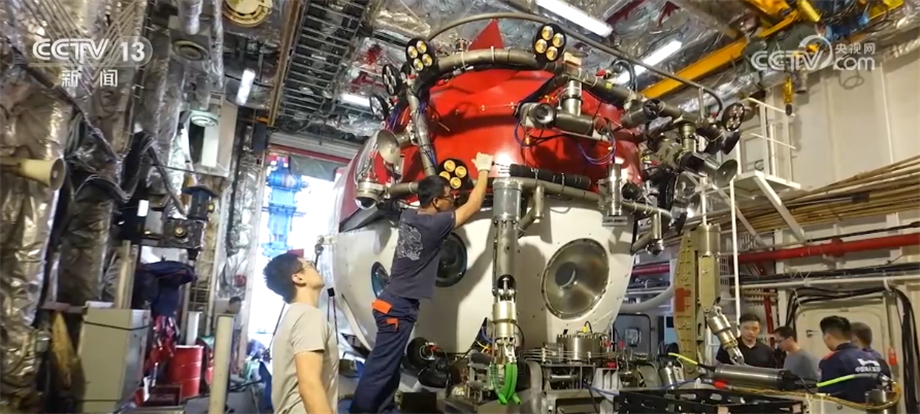
In addition, the "Deep Sea Warrior" manned submersible has also upgraded its high-definition camera system, greatly improving the quality of underwater video shooting, and cleaning up the buried sediments attached to the surface of cultural relics through devices such as sand blowing and dust suction carried by the submersible to assist archaeologists in identification and in-situ observation.
It is understood that since it was put into use in 2017, the "Deep Sea Warrior" manned submersible has performed a total of 577 dives, with an average annual dive of over 100, maintaining the world’s leading operation and maintenance level. In recent years, the application fields of "Deep Sea Warrior" manned submersible are also expanding, covering deep-sea scientific research, emergency search and recovery and cooperative operation of unmanned submersible. Deep-sea archaeology is becoming a new proposition and challenge for China’s manned deep diving.
Chen Chuanxu, Deputy Director of Science Department, Institute of Deep Sea Science and Engineering, China Academy of Sciences:Without the progress of deep-sea technology and equipment, facing the historical and cultural heritage left by our ancestors in the deep sea, we will have no way to dive, know, and have no way to conduct deep-sea archaeology.