Install "isolation pads" on buildings to resist earthquake hazards
  Photo courtesy of vision china

  1.54 billion yuan

  In addition to ancient buildings and transportation infrastructure, the project achievements have been applied to many other livelihood projects, such as the isolation and reinforcement projects of important buildings such as primary and secondary schools and hospitals, and the construction projects of high-rise isolation residential areas. There are more than 60 projects of various categories, with a total construction area of about 3.36 million square meters and direct economic benefits of 1.54 billion yuan.

  Key words of "people’s livelihood" in science and technology awards ③

  2021 is the 45th anniversary of the Tangshan earthquake. In the past half century, in order to cope with the challenges caused by the earthquake and ensure the safety of people’s lives and property, the scientific and industrial circles have made great efforts. Since 1990s, isolation has gradually become one of the important concepts in the field of disaster reduction and resistance.

  At the 2020 National Science and Technology Awards Conference held a few days ago, the project "Key Technology and Engineering Application of High Performance Isolation Building Series" won the second prize of the National Science and Technology Progress Award. The project was jointly completed by Beijing University of Civil Engineering and Architecture, Southeast University, China Institute of Building Science, Beijing Institute of Architectural Design and Research, China Institute of Building Standards Design and Research, Beijing Infrastructure Investment Co., Ltd. and Jiangsu Hongji New Energy Saving Technology Co., Ltd. The appraisal by the expert committee shows that the achievements of the project have reached the international advanced level, among which the design method of high-performance isolation buildings and high-performance isolation devices have reached the international leading level. The results of the project have been applied to many major projects.

  What is isolation, how to understand the "high performance" in the project, and which major livelihood projects have applied high performance isolation technology? The reporter of Science and Technology Daily contacted a number of relevant units and asked them to give professional answers to these questions.

  The core feature of seismic isolation is "being flexible and being rigid"

  "Isolation is like stepping on a building ‘ Roller skates ’ 。” At the exhibition of application technology achievements of disaster prevention, mitigation and relief held in July 2021, the staff from Zhen ‘an Technology, a manufacturer of seismic isolation, introduced the characteristics of seismic isolation technology to the reporter of Science and Technology Daily. "The traditional concept of building earthquake resistance is to play hardball, ‘ Make rigidity with rigidity ’ The main means is to increase the physical strength of the members, which will lead to stronger earthquake action of the superstructure. The core concept of seismic isolation technology is ‘ Take Roukegang ’ Isolation devices, such as rubber bearings and dampers, are installed between the foundation or substructure of the building and the superstructure to reduce the seismic energy input to the superstructure, which can reduce the seismic action to 1/4 to 1/8. "

  The physical model demonstrated in the field shows that when an earthquake occurs, the superstructure with isolation device only moves in parallel with a relatively small amplitude, while the building without isolation technology shakes much more violently. "This is the basic principle of isolation." The staff introduced.

  However, this simple model is not enough to present the complete connotation of isolation technology. In reality, the application of technology must deal with all kinds of complex needs and scenes, such as high-rise residential buildings, hospitals, subways and historical buildings, which all have different conditions and requirements for isolation technology. In the design and construction of isolated buildings, there have been four major problems in the world for a long time, such as lack of applicability of design theory, lack of systematicness of design technology, lack of efficiency of key devices and lack of standardization of quality control. Therefore, the project "Key Technology and Engineering Application of High Performance Isolation Building Series" came into being, aiming at solving a series of key problems about high performance isolation technology.

  There are both theoretical breakthroughs and practical applications

  In view of the four long-standing problems, the project has mainly realized four innovations, namely, the design theory of high-performance isolation structure, the multi-objective integrated design technology of isolation structure, a series of high-performance isolation devices with adjustable functions, and the quality control technology of isolation building construction, and edited a series of standards.

  "Our project lasted for more than 20 years and produced a lot of results, with rich content." In an exclusive interview with Science and Technology Daily, Guo Tong, the second winner of the award-winning project and a professor at the School of Civil Engineering of Southeast University, explained that the project has published 166 papers, won 30 invention patents and published 5 works, and the results have been applied to more than 60 important projects.

  "For example, we have developed a variety of high-performance isolation bearings, such as rubber bearings with ultra-low modulus and high damping, adjustable and low-frequency sensitive composite isolation bearings, and new tension-controllable isolation bearings. In addition to bearings, there are other devices, such as adjustable viscous dampers and large deformation flexible pipes, which are our achievements in device research and development. However, the project results are not only the device, but also the design theory, design technology and quality standards. " Guo Tong added.

  As the second completion unit of the award-winning project, Southeast University took the lead in completing a number of project achievements, covering the main aspects of the above four innovations. In addition to innovation in design and theory, the project has many achievements in engineering application and promotion, and many of these achievements have already landed and become a part of people’s livelihood projects in daily life.

  It has been widely used in people’s livelihood projects

  "Add the bottom" to the ancient building and "add the cover" to the subway … … Among the application achievements of the project "Key Technology and Engineering Application of High Performance Isolation Building Series", there are many such "ingenious pens".

  In 1933, at the initiative of Cai Yuanpei and others, the Humanities Museum of the National Central Museum was completed in Nanjing, which is today’s Nanjing Museum. With the help of seismic isolation technology, this 80-year-old national key cultural relics protection building has become more "young" — — With the advanced technologies such as integral lifting (3m) and seismic isolation and reinforcement, the seismic level of the building has been effectively improved, the appearance and features have not been damaged, and the internal space of the building has also been expanded, giving cultural protection units and visitors more margin. After the completion of the project, the Disaster Prevention Research Center of the Ministry of Housing and Urban-Rural Development included this reinforcement of Nanjing Museum as a classic case and also selected it as the cover of the published series.

  In another famous historical and cultural city, Beijing, thousands of miles away, the achievements of isolation technology also show their talents. Compared with Nanjing, some natural and human conditions in Beijing are more complicated: being in an earthquake-prone area, earthquakes have been frequent since ancient times; It has the longest subway system in the world; There is a large population and the intensive land use of transportation hubs is tight. Seismic isolation technology plays a key role in the construction of high-performance buildings. In Beijing Metro Line 6 Kunyufu, Line 8 Park Yuefu and Line 16 Beian River Cover, the key technologies of complex high-rise isolation structures have been popularized and applied, with an application area of 890,000 square meters, which is the largest cover isolation building complex in the world at present.

  In addition to the above-mentioned subway superstructure isolation building, there is also a major infrastructure project in Beijing that adopts the project results. According to the data provided by China Institute of Building Standards Design and Research, the fifth completion unit of the project, the national industry standard of Flexible Pipeline for Building Isolation edited by this unit has been applied to the high-performance isolation device of Beijing Daxing Airport. Daxing Airport, located on the southern extension line of Beijing’s central axis, is the largest single isolation building in the world at present. A total of 1,152 sets of isolation devices are used in the terminal building, and the rubber isolation bearings used are the highest in China, both in volume and tonnage of a single bearing.

  A major feature of Daxing Airport is that different means of transportation can transfer at the same station, and the negative second floor of the terminal is used for high-speed rail, subway and intercity trains. The high-speed entry and exit of trains will produce strong vibration and large wind pressure, which is also one of the difficulties that isolation technology in China has overcome.

  Guo Tong said that in addition to ancient buildings and transportation infrastructure, the results of the project are also applied to many other livelihood projects, such as the isolation and reinforcement projects of important buildings such as primary and secondary schools and hospitals, and the construction projects of high-rise isolation residential areas, such as the Tianyang Innovation City project in Yanjiao, Hebei Province, with a total area of about 1.14 million square meters, and the Xichang Territory project in Sichuan Province, which is located near the fault in the 9-degree zone (the earthquake amplification factor is 1.5). There are more than 60 projects of various categories, with a total construction area of about 3.36 million square meters and direct economic benefits of 1.54 billion yuan.

  According to the data of Sichuan Seismological Bureau, as early as 2015, the total number of buildings applying isolation technology in China has exceeded 6,000, accounting for half of the world, more than 5,000 in Japan, ranking first in the world. The staff of Zhen ‘an Science and Technology said that at present, there are more than 10,000 buildings applying isolation technology in China.

  Guo Tong commented that as an efficient means of structural earthquake prevention, isolation technology has broad application prospects in the future. Technicians are still developing various isolation devices with excellent performance and expanding their application scope, contributing to improving the city’s disaster prevention capability.

  ◎ Intern reporter Sun Mingyuan
The largest range of rain and snow weather since winter, the rainy weather in the south will last for a week.

  Xinhua News Agency, Beijing, February 14th Question: The largest range of rain and snow weather since winter. The rainy weather in the south will continue for a week.

  Xinhua News Agency reporter Gao Jing, Hu Lu

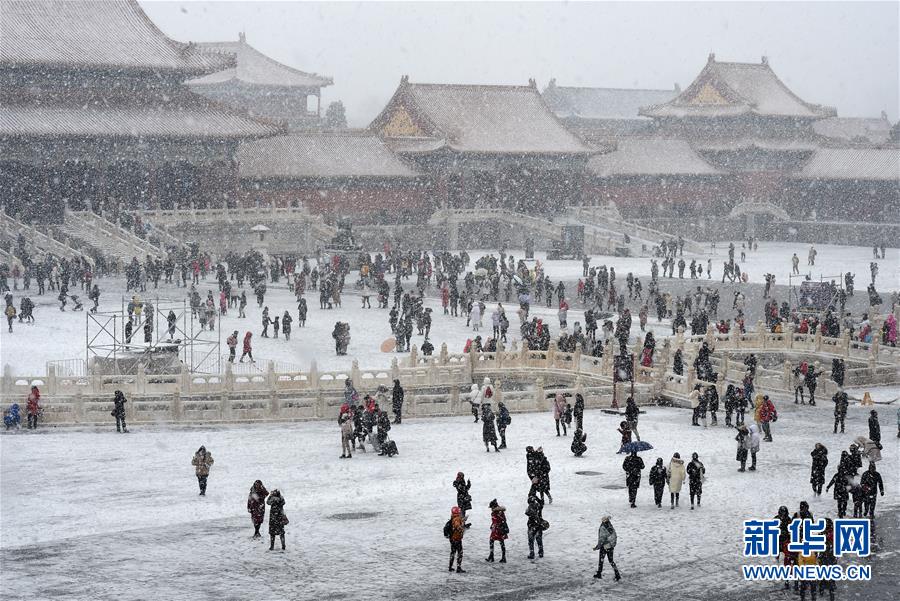
  On February 14th, tourists visited the Forbidden City in Beijing in the snow. On that day, it snowed in Beijing, and a large number of tourists came to the Forbidden City to enjoy the snow. Xinhua News Agency reporter Luo Xiaoguang photo

  Snowflakes are fluttering in the north and rainy in the south. On the 14th, the largest range of rain and snow weather since winter came online. What is the reason for the rain and snow? What will the weather be like in the future? The reporter interviewed relevant experts.

  The snowfall in the north has a large impact range and strong intensity.

  Fang Yi, chief forecaster of the Central Meteorological Observatory, said that around the 14th, the snowfall in the north was generally characterized by a large impact range and strong intensity, which was the largest and strongest snowfall in North China since winter. There are small to medium snow or sleet in central Inner Mongolia, Hebei, Beijing, Tianjin, Henan and other places, which gradually weakens after nightfall that day. Snowfall in Liaoning, Shandong and eastern Inner Mongolia will last until the morning or day of the 15th.

  Just two days ago, the snowfall on the 12 th has already surprised many small partners in the north. It is also snowing, but the snow on the 14th is somewhat different from that of the previous days.

  Fang Yi pointed out that the difference between the two snowfall processes lies in the different sources of cold air and water vapor. This round of snowfall is due to the continuous eastward movement of cold air in northern Xinjiang and southward along the northwest road. Before the influence of cold air, the ground inverted trough and the low-level southerly wind were significantly strengthened, which transported the warm and humid airflow from the south to the north, which was beneficial to the formation of snowfall in Huanghuai area of North China. On the 12th, the snowfall process was mainly caused by the return of cold air from the East Road. In addition, there was an easterly wind in Bohai Sea to transport water vapor, which led to snowfall in Huanghuai area of North China.

  Strictly speaking, the snow on the 14th was the third snowfall in Beijing recently. Not only that, since February, there has been obvious snowfall in many places in the north, including Beijing.

  Chen Lijuan, chief of the Climate Prediction Office of the National Climate Center, said that the precipitation situation is closely related to the coordination of cold air activities, water vapor transport and other conditions. In February, there were two strong cold air processes affecting China. At the same time, the subtropical high in the western Pacific is stronger than normal, and it is north by west, which leads a lot of water vapor from the northwest Pacific and the South China Sea to be transported to China, especially to the north of the Yangtze River, where it merges with the cold air guided by the trough from Mongolia to Northeast Asia, forming favorable conditions for precipitation in the north. Because the temperature is obviously lower than normal, it appears in the form of snowfall.

  The continuous rain in the south has lasted for a week.

  Since February 7th, there has been continuous rainy weather in southern China for one week. Fang Yi said that due to the strong and stable subtropical high, the south branch trough is more active, the low trough keeps moving eastward, and the warm and humid airflow is strong, resulting in continuous rainy weather in the south.

  He said that in the coming week, there will be continuous rainy weather in Jiangnan, South China, Jianghuai, Jianghan, Chongqing and Guizhou. In particular, it should be noted that from 17th to 18th, heavy rain may occur in parts of central and western South China and central and western South China, and the possible secondary disasters should be prevented in time.

  Fang Yi pointed out that for the northern region, Xinjiang, Tibet, Qinghai and other places will have small to medium snow, local heavy snow or blizzard from 14th to 16th. Around the 18th, there will be a snowfall mainly with light snow in south-central North China, Huanghuai and other places, and moderate to heavy snow may occur in some areas of Huanghuai.

  Chen Lijuan said that from December 1, 2018 to February 13, 2019, the national precipitation was 29% higher than the normal average, but the spatial distribution was extremely uneven. The eastern region was "less in the north and south, more in the middle", that is, less in the northeast, north China and eastern South China, but more in Jianghuai and Jiangnan, and more in the western region as a whole.

  Ruixue is a good year, especially for the northern region. Because of less precipitation in the early stage, snowfall is very beneficial to alleviate drought and agricultural production. However, the continuous rainy weather in the southern region will affect the growth of crops to a certain extent.

  The global climate is closely related, and El Ni? o "adds fuel to the fire"

  Looking around the world, not only has there been precipitation in many places in China recently, but there have also been frequent snowstorms in Europe and the United States.

  Chen Lijuan pointed out that Europe, influenced by the Atlantic warm current, belongs to a temperate maritime climate, and the water vapor conditions are still abundant in winter, which is favorable for precipitation. If cold air from the polar regions moves southward, it is easy to form snowfall. Influenced by the water vapor transport conditions in the western Atlantic Ocean and the eastern Pacific Ocean, the United States is also prone to heavy snowfall when it encounters strong cold air activities. From January 26 to 30, the polar vortex invaded the United States southward, and two-thirds of the United States suffered from extremely cold weather, and the temperature dropped to the lowest in many years.

  She said that from the global climate background, since September 2018, the tropical Middle East Pacific has entered an El Ni? o state, which will form an El Ni? o event, which is conducive to transporting more tropical ocean water vapor to the southern United States. El Nino event has no direct contribution to the cold wave in North America, but when the cold wave occurs, if more water vapor is transported to the mainland of the United States, it will easily lead to heavy snowfall, thus aggravating the disaster and influence of cold wave activities.

  At the same time, when El Ni? o occurs, it is beneficial to transport more water vapor from the western Pacific Ocean and the South China Sea to China’s land areas, creating conditions for precipitation in the eastern part of China, and cooperating with the process and intensity of cold air activity in the middle and high latitudes, causing rainfall or snowfall in different parts of China.

How many of these technologies from NASA have you seen?

  Today viewpoint

  Aerospace gives people a special feeling of "high cold", which reminds them of advanced fighter planes and magnificent space stations that ordinary people can’t see, touch or use.

  A few days ago, the well-known American website "GOBankingRates" took stock of 25 kinds of technologies originated from the National Aeronautics and Space Administration (NASA) in our daily life, which spread all over our "food, clothing, housing and transportation". They come from the distant sky, but they are convenient for our daily life.

  Food: baby milk powder, freeze-dried fruit, food safety packaging.

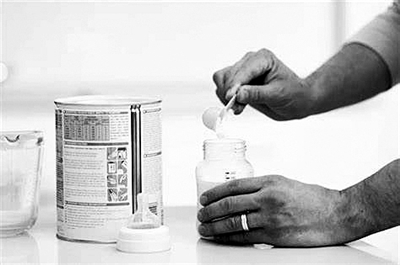
  At present, more than 90% of infant formula in the United States contains microalgae. It was originally the product of NASA research, the purpose of which was to test the potential use of algae as an oxygen "recycling agent" in space travel.

  Freeze-dried fruit is a common snack. However, the purpose of NASA’s development of freeze-drying technology is to make the fruits in the Apollo mission easier to carry, and this technology can maintain 98% nutrition with 20% quality.

  In order to ensure the safety and quality control method of space flight food development, NASA has now become a food industry standard to protect the food safety of consumers all over the world.

  Life: memory foam mattress, scratch-resistant lenses, anti-ultraviolet sunglasses, cordless vacuum cleaner, Nike air-cushion sports shoes, space blankets, ski boots.

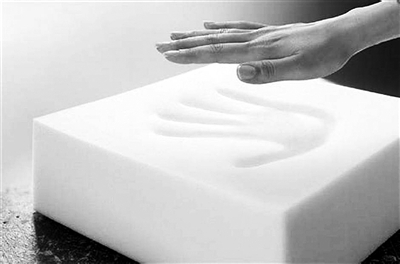
  Comfortable memory foam mattress can fully fit the human body and relieve stress, which is necessary for many families. Memorable foam was not originally used to make mattresses. It was originally developed by NASA to cushion the impact of spacecraft landing on astronauts.

  Compared with ordinary glass, scratch-resistant lenses have a longer life. In fact, the scratch-resistant coating is a "by-product" accidentally discovered by Jet Propulsion Laboratory (JPL) under NASA when researching the diamond hard coating for aerospace.

  In 1980s, two scientists from JPL developed a kind of welding glasses, which can absorb, filter and scatter the strong light emitted during welding. Later, this technology was widely used in anti-ultraviolet sunglasses.

  Initially, Black&Decker was ordered to develop a portable device for Apollo and Gemini missions, which was used to extract samples from below the surface of the moon. This technology has been improved to become a "cordless vacuum cleaner".

  Nike air-cushioned sneakers use the patent of "Blow Rubber Molding" obtained by M. Frank Rudy, a former engineer of NASA. The initial application target of this technology is spacesuit.

  The space blanket is insulated and heat-preserved, which is an essential item for survival in the wild and marathon. But it was originally developed by NASA to protect spacecraft and astronauts at low temperatures.

  In addition, the technology used by NASA in the joints of spacesuits has been improved and used in ski boots, which improves the athletes’ control ability in skiing.

  Home: swimming pool purification system, household heat insulation materials.

  In order to resist the extremely low space temperature, NASA made an insulating material called "radiation barrier" from aluminized polyester. According to JPL, aluminized polyester is now used in most household insulation materials.

  In 1960s, NASA developed an electrolytic silver iodide filter to provide clean drinking water for astronauts, and now it is widely used to purify swimming pools.

  Travel: aircraft deicing system, precision GPS, anti-skid groove on highway, better tires.

  According to NASA’s technology transfer plan, civil aircraft can fly in cold weather, mainly due to a thermoelectric deicing system called Thermawing developed by NASA.

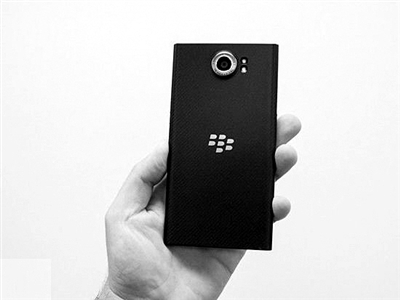
  Many mobile phones are equipped with precision GPS technology developed by JPL, and its data comes from JPL global GPS receiver network. Even if there is no wireless connection, you can still use GPS positioning on your mobile phone.

  NASA’s Langley Research Center has developed anti-skid slot technology to prevent aircraft accidents on wet runways. Later, this technology was widely used in expressways.

  In 1970s, Goodyear Company developed a new tire material for NASA Viking Mars probe, which was used in parachute system. This technology was later used to improve ordinary tires, increasing their life by 10,000 miles.

  Electronic products: mobile phone camera, notebook computer, high-power solar cell, wireless headset, mouse, CAT scanner.

  In the 1990s, NASA asked JPL scientists to make a miniature camera that can be installed on spacecraft while ensuring the quality of photography. According to JPL, one-third of mobile phone cameras now use this technology.

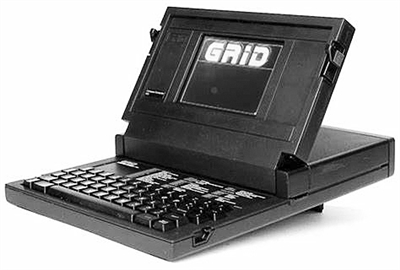
  According to the Smithsonian National Air and Space Museum, "Grid Compass" is the first notebook computer in the world. It was first used in the space shuttle mission in 1983, which is one of the inventions of NASA.

  The crystalline silicon solar cells used in the home originally came from the lightweight solar energy system developed by the Environmental Research Aircraft and Sensor Technology Alliance under NASA for electric aircraft.

  NASA has developed wireless headphones for astronauts to facilitate their communication. Now this technology has entered thousands of households.

  According to JPL, a NASA researcher developed a computer mouse in the 1960s, which allowed users to operate on the computer screen and made the computer more interactive.

  JPL initially developed a CAT scanner to scan aerospace components to get advanced digital images to detect defects. Now, it has become a commonly used medical instrument.

  Medical care: cochlear implant, invisible dental appliance, ear temperature thermometer.

  Adam Kiser, an engineer at Kennedy Space Center, used his working experience in electronic, sound and vibration sensor systems in the space shuttle project to develop early cochlear implants by using electric pulses instead of sound amplification technology.

  Compared with the traditional metal appliance, the invisible dental appliance is more beautiful. It is made of transparent polycrystalline alumina, which was originally developed by NASA to track heat-seeking missiles.

  Nowadays, many parents use ear thermometer to measure the temperature of sick babies or young children. According to JPL, this thermometer adopts infrared dissection technology invented by NASA and Diatek.

  There is always one of these 25 technologies that you have seen, touched and used. Aerospace technology can not only be used in high space, but also improve our quality of life after landing, which is one of the driving forces for human beings to explore and fly higher and farther.

  (Science and Technology Daily, Beijing, July 8 th)