[Piloting a new journey] The Yangtze River Economic Belt opens a new voyage of development

  A unified start, Vientiane update. The boat sailed in Dongting, but saw the sky above and below, and it was a blue sky. From the south of Bianshan Island to the waters of Yanzizhou, small groups of finless porpoises can be seen playing out of the water from time to time. "The appearance of the finless porpoise benefited from the gradual improvement of the water quality in East Dongting Lake." Peng Xiangming, stationmaster of Chenglingji Station of Yueyang County Fishery Administration Bureau, Hunan Province, introduced. Not long ago, Yueyang just closed the last farm in the drinking water source area of the lake area.

  At 6: 30 in the morning, Zhang Hongxing, the "folk river chief" of Fanqiang Village, Bai Quan Town, Dinghai District, Zhoushan City, Zhejiang Province, went out on time and patrolled the river for two hours. Many enterprises have been set up beside the river. Every time they go to the nearest bank, they bend down to check and make sure there is no sewage discharged, then they get up and go back to the shore with peace of mind. Just after 4 pm, he "went to work" on time and started a new round of river patrol. Zhang Hongxing’s image today is hard to relate to his past status as the owner of a brick and tile factory.

  Downstream from Yueyang to Zhoushan Islands surrounded by waves, the Wanli Yangtze River is unfolding a new picture of ecological civilization.

  "At present and for a long time to come, we should put the restoration of the ecological environment of the Yangtze River in an overwhelming position, work together for great protection and not engage in great development." On January 5, two years ago, General Secretary of the Supreme Leader held a symposium in Chongqing to promote the development of the Yangtze River Economic Belt, which set the direction and tone for the development of the Yangtze River Economic Belt, and the mother river of the Chinese nation opened a new development voyage.

  Green development and great protection highlight a new pattern.

  It is the fourth time that Sheng Yiqiang, who has been "eating the lake by the lake" for generations, has changed careers.

  In the warm winter sun, from the hut he built on the Liangzi Lake in Ezhou City, Hubei Province, not far away is Changling Wharf, where only three or two fishing boats dock, which is no longer the bustling old scene.

  On New Year’s Day, fishing was completely banned in Ezhou, liangzi lake. A few months ago, I learned that Sheng Yiqiang invested more than 200,000 yuan to plant Chinese herbal medicines all over the pond in front of the shack. In the past few years, his weir pond has been demolished three times from raising fish, crabs and pearls to changing Chinese herbal medicines.

  At present, there are more than a thousand fishermen who are facing the same transformation as him.

  The Yangtze River basin covers 11 provinces and cities, and its population and GDP both exceed 40% of the whole country. Once upon a time, with the rapid economic growth and large-scale development of river basins, many industrial and domestic wastewater was directly discharged into the Yangtze River and its surrounding waters. In 2012, the data released by the Ministry of Water Resources showed that nearly 40 billion tons of the total 78.5 billion tons of wastewater discharged in China were discharged into the Yangtze River — — Almost equivalent to the water volume of a Yellow River.

  A series of problems, such as insufficient systematic protection of river basins, large discharge of pollutants, and serious degradation of ecological functions, have become increasingly apparent, and the development model of doing things quickly at the expense of ecological environment has come to an end.

  Adhere to the core concept and strategic positioning of problem-oriented deployment of new economic development strategy, ecological priority and green development, and reshape the Yangtze River in a transformative way.

  In the wetland of East Dongting Lake National Nature Reserve, cygnets from Siberia come here and flock back. The return of migratory birds means that the move of "retiring livestock and poultry" in Yueyang City has been effective.

  Yueyang, with 60% of Dongting Lake water area, is also a big city for livestock and poultry breeding in the lake area. In 2016, the city slaughtered 7,528,100 pigs, ranking second in Hunan Province; The production of aquatic products is 537,800 tons, ranking first in the province for 26 consecutive years.

  On the one hand, the aquaculture industry is developing, and on the other hand, the pollution of Dongting Lake is increasing. How to solve the "water control deadlock" between the breeding market and Dongting Lake?

  Yueyang’s choice is quick and messy: by the end of 2017, all 381 farms in the drinking water source area of Dongting Lake in the city had withdrawn from the historical stage. Combination punches such as illegal dock renovation occupying the Yangtze River coastline and comprehensive ban on sand mining in Dongting Lake area were simultaneously used.

  "In the past, Yueyang was rich in sand and gravel, which were exported to Jiangsu and Zhejiang provinces, but now it has to be imported from other places ‘ Import ’ The price of sand and gravel also rose from 20 yuan and 30 yuan to 150 yuan per ton. The 19th National Congress of the Communist Party of China proposed to promote the development of the Yangtze River Economic Belt with the guidance of joint protection and no development. This has further strengthened our determination to maintain the ecology of the lake area and combat illegal sand mining. " Kun yang, deputy mayor of Yueyang City, said.

  The 959 illegal docks that should be banned along the Yangtze River have all been dismantled, illegal sand mining has been initially curbed, and the pollution of heavy chemical industry along the Yangtze River and lakes has been initially rectified. The rectification of 928 black and odorous water bodies in 110 cities at or above the prefecture level has started 826 and 498 have been completed … … The special action of ecological environmental protection has drawn a sword, and hard measures have brought about real changes. As Jiang Fuyi, secretary of the Luzhou Municipal Committee of Sichuan Province, said, "The most profound change in the past two years is the change of ideas."

  Innovation and development, grand strategy breeds new kinetic energy

  If the long eastern coastline is like a long bow ready to go, then the Yangtze River Economic Belt is the sharp arrow that draws out of the air. The energy and strength of the arrow determine the position that our economy can reach.

  Home appliances controlled by voice, translation shorthand products with speech recognition accuracy as high as 98%, and intelligent interactive technology service platform for 470,000 entrepreneurial R&D teams & HELIP; … At the headquarters of Iflytek in Hefei, Anhui Province, a series of artificial intelligence "black technology" products dazzled reporters. Relying on independent innovation, Iflytek’s artificial intelligence core technology represented by "iFLYTEK Super Brain" has been ahead of the world, successfully occupying 70% of the Chinese voice market.

  The rise of Iflytek is only a microcosm. Conforming to the new round of global scientific and technological revolution and industrial transformation trend, adhering to the practical benchmark of "jointly protecting and not developing" and aiming at the goal of "innovation-driven belt leading the national transformation and development", the provinces and cities in the Yangtze River Economic Belt have made great efforts to deepen the structural reform on the supply side, and made good innovation "first move", and emerging industries are gestating and growing.

  In Sichuan, seven strategic emerging industries, such as information technology, new energy and high-end equipment manufacturing, are booming, and are striving to climb the "intellectual high point" of transformation and upgrading; In Hunan, the distinctive and competitive "Lugu Valley" in Changsha, "Power Valley" in Zhuzhou and "Smart Valley" in Xiangtan go hand in hand, and the development path has changed from "black" to "green"; In Hubei, the "new troika" composed of information technology, life health and intelligent manufacturing has accelerated the rise of the new "Made in Wuhan".

  The report of the 19th National Congress of the Communist Party of China emphasized that innovation is the first driving force for development and the strategic support for building a modern economic system. We need vitality for reform and motivation for innovation, and the race for independent innovation in 11 provinces and cities along the Yangtze River has flourished.

  Before Zhejiang’s private economy led the trend, it was also in trouble because of the "low and scattered" industry. Learning from a painful experience, Zhejiang has accelerated the cultivation of eight trillion industries, including information, finance and high-end equipment manufacturing, in recent years as the main driving force for economic growth. According to the data of the first three quarters of 2017 recently released by Zhejiang Province, the new economy represented by the digital economy accounts for 24% of GDP and contributes 31.9% to economic growth.

  World-class, the only steady-state strong magnetic field device in China, the first fully superconducting nuclear fusion experimental device in the world and the only one in China, the world’s first optical quantum computer, and the world’s first quantum science experimental satellite "Mozi" & HELIP; … The scientific and technological papers handed over by the central province of Anhui are surprising.

  From the high-level promotion of the construction of Hefei Comprehensive National Science Center to the high-intensity promotion of the National Laboratory of Quantum Information Science to create the "No.1 Project" of scientific and technological innovation, from the systematic promotion of comprehensive innovation reform experiments to the in-depth promotion of the "three rights" management reform of scientific and technological achievements, innovation has become the "head gun" of Anhui’s development. On December 20th, 2017, the 10th generation line of BOE was put into production ahead of schedule in Hefei New Station District, which is the first 10th generation LCD panel production line in the world. Wuhu Hangrui Aviation Power Equipment Co., Ltd. recently launched six small and medium-sized aero engines, which not only have completely independent intellectual property rights, but also fill the gap in the industry.

  Shanghai Science and Technology Innovation Center has been accelerated, and 1327 state-level science and technology business incubators and about 45,000 high-tech enterprises have been built in 11 provinces and cities along the Yangtze River … … Using "fast thinking" to speed up the transformation mode, adjust the structure and change the dynamic pattern, and open up a broader development space for the Yangtze River Economic Belt.

  Coordinated development, building a new thoroughfare in the big corridor

  Just like the water level difference, the Yangtze River is also an economic belt with uneven development in the east, west and east.

  General Secretary of the Supreme Leader talked about the construction of the Yangtze River Economic Belt on many occasions, emphasizing "coordinated development" — —

  "The Yangtze River basin should strengthen cooperation, give full play to the role of inland navigation, develop river-sea combined transport, and turn the whole basin into a golden waterway."

  "It is necessary to strengthen systematic thinking, coordinate local reform and development, various interregional policies, construction in various fields, and various resource elements, so as to make the synergy among provinces and cities along the Yangtze River more obvious."

  How to make the "golden waterway" of the Yangtze River truly become the "water highway" and "golden artery" connecting the Yangtze River Economic Belt has become a "required question" for all provinces, cities and shipping management departments along the Yangtze River.

  "The Yangtze River is in Jingjiang, and I have a deep understanding." As an old captain who has been "drifting" on the Yangtze River for almost 40 years, Huang Shuangxi, the chief captain of Changhang Freight Co., Ltd., was quite impressed. "In the past, there were 17 key navigation-obstructing beaches within the range of more than 340 kilometers from Zhicheng, Hubei Province to Chenglingji, Hunan Province, with twists and turns and dangers, and ships ran aground, hit rocks and blocked navigation frequently."

  In April 2017, the Jingjiang Waterway Regulation Project, which took 27 months to build with a total investment of 4.33 billion yuan, was completed. The minimum maintenance depth in dry season was increased from 2.9 meters to 3.8 meters, and Huang Shuangxi’s fleet could also be "upgraded" to more than 3,000 tons.

  "For every 0.1m increase in navigable water depth in Jingjiang section, the 2,000-ton freighter can load about 170 tons more cargo, and the profit can be increased by 10%. More importantly, the fleet is much safer! " Huang Shuangxi was beaming.

  In order to further open up the "intestinal obstruction" that restricts the capacity of the Yangtze River trunk line, in early November 2017, the Hunchun waterway regulation project in the middle reaches of the Yangtze River started, opening the curtain of "Anqing-Wuhan waterway regulation project with a water depth of 6 meters and Wuhan-Yichang waterway regulation project with a water depth of 4.5 meters".

  Wen Xinxiang, deputy director of the Yangtze River Waterway Bureau of the Ministry of Transport, calculated an account for the reporter: after the project is implemented, 13,000-ton inland river vessels and 10,000-ton river-sea vessels will go directly to Wuhan and 5,000-ton inland river vessels will go directly to Yichang. After 20 years of operation, Yangtze River shipping can generate direct economic benefits of 54.7 billion yuan, which will save 100 billion yuan in logistics costs compared with railways and 360 billion yuan compared with highways.

  Thousands of miles away in the lower reaches of the Yangtze River, shipbuilding enterprises have a heart.

  Zengzhou Shipyard, located in Zhoushan, Zhejiang Province, is the first 20,000-ton river-sea through ship in China — — Zhoushan Jianghai Zhida No.1 slowly left the dock and entered the East China Sea, realizing the first water connection.

  "In March this year, the ship will be put into operation on the Ningbo Zhoushan Port-Maanshan route. Compared with the same type of bulk carrier, the ship can reach the sea through the river, thus rewriting the history that 20,000-ton seagoing ships cannot pass through the Nanjing Yangtze River Bridge. " Suo Xudong, deputy director of Zhoushan Port and Shipping Administration, said.

  At 9 o’clock on the morning of December 27th, 2017, at Berth 6 of the container terminal in Chuanshan Port Area of Zhoushan Port, Ningbo, a container in "red suit" was steadily hoisted onto the container liner, marking that Zhoushan Port in Ningbo became the first port in the world with an annual cargo throughput exceeding "1 billion tons", ranking first in the world for nine consecutive years.

  Form a port alliance with more than 20 major ports along the Yangtze River to deepen the reform of port integration and regional port cooperation … … Zhoushan River-Sea Intermodal Transport ushered in broad prospects.

  Breaking the mindset of one acre and three points, in the past two years, the cooperative development mechanism of cooperation and mutual benefit and win-win has been promoted in exploration and strengthened in innovation.

  From Chongqing, Sichuan, Yunnan and Guizhou, the Detailed Rules for the Implementation of the Inter-provincial Consultation and Cooperation Mechanism in the Upper Reaches of the Yangtze River were reviewed and approved, and the four capital cities of Wuhan, Changsha, Hefei and Nanchang jointly signed the Action Plan for the Cooperation of Capital Cities in the Middle Reaches of the Yangtze River (2017— 2020), from the formal establishment of the financial leasing service Yangtze River Economic Belt Alliance to the Yangtze River Basin Park Cooperation Alliance, cooperation is making the Yangtze River Economic Belt glow with a brand-new temperament … …

  Our reporter Guo Shuran Hou Linliang Ding Yiting Fan Haotian
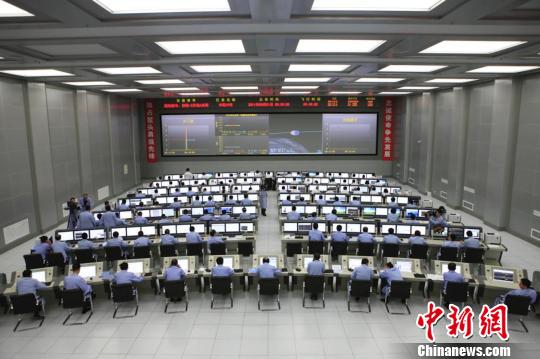
Visiting Xi ‘an Satellite TT&C Center: Satellite Housekeeper Casting a Monument

Visiting Xi 'an Satellite TT&C Center: Satellite Housekeeper Casting a Monument

  Xi ‘an Satellite TT&C Center is the earliest, largest and most functional spacecraft TT&C and management center in China, and has successfully completed hundreds of TT&C tasks for space launch. Photo by Zhang Chengwei

  Zhongxin. com, Xi ‘an, April 25th: The satellite "housekeeper" casts a "monument" — — Visit China Xi ‘an Satellite TT&C Center

  Author Zhang Chengwei Zhang Su

  The ancient city of Xi ‘an is an international city where human history and modern science and technology complement each other. Xi ‘an Satellite TT&C Center, located here, is the earliest, largest and most functional spacecraft TT&C and management center in China, and has successfully completed hundreds of TT&C tasks for space launch.

  The reporter learned that on June 23rd, 1967, China established the Satellite Ground Survey Department, which was the predecessor of Xi ‘an Satellite TT&C Center. In September 1975, the center was formally established.

  The relevant person in charge said that the temporary command and control center that initially performed a single measurement and control task has developed into a modern space measurement and control center that integrates real-time measurement and control of spacecraft and long-term management of spacecraft in orbit. There is the only land-based space TT&C network in China, with TT&C sites spread all over five continents and 13 provinces and regions in China.

  The first monument

  China has no ready-made experience to learn from in building sophisticated satellite ground observation systems. The technicians of the satellite ground survey department started from scratch, worked hard, built the computer room, installed the antenna and laid the cable by themselves, debugged the equipment in the heat and cold, and wrote the program under the oil lamp in the humble room, which passed the difficult years in the history of measurement and control.

  Under the auspices of Academician Chen Fangyun, the scientific and technical personnel gathered their wisdom to tackle key problems and worked out the measurement technical scheme of China’s first artificial satellite.

  On April 24th, 1970, the "Dongfanghong-1" satellite flew to Tianyu, and China became the fifth country in the world to launch a domestic satellite with a homemade rocket after the Soviet Union, the United States, France and Japan. The launch measurement and control of the "Dongfanghong-1" satellite was a complete success. The center accurately predicted the time and position of the satellite flying over 244 cities in the world, and set up Chinese’s first "milestone" in the vast sky.

  People follow the stars.

  In the years after the successful launch of Dongfanghong-1 satellite, the United States and the Soviet Union launched several recoverable satellites. At that time, China had "two bombs and one satellite", its national strength gradually increased, and China astronauts were full of confidence.

  On November 26th, 1975, China successfully launched its first recoverable satellite. The central activity monitoring and recovery unit "people move with the stars", using radio direction finder and other equipment to capture satellites returning at high speed independently, creating a successful achievement in satellite recovery.

  Synchronous fixed point

  In 1970s, the space powers accelerated the pace of space race. China executives pointed out: "China is a developing country. It will not participate in the space race in terms of space technology, and it should concentrate on urgently using practical satellites." China’s first applied satellite "Dongfanghong II" communication satellite came into being.

  On April 8, 1984, China successfully launched the first communication satellite "Dongfanghong II". The center and the monitoring stations fought continuously, carefully monitored and controlled for 8 days and nights, and successfully positioned the satellite over the equator at 125 degrees east longitude and 36,000 kilometers. China became the fifth country in the world to launch a geostationary orbit satellite.

  Spacecraft recovery

  On September 21, 1992, China’s manned spaceflight project was launched. The center undertakes two major system tasks: measurement and control communication and landing site.

  The landing site system is mainly responsible for the search and recovery of spacecraft return capsule and the search and rescue of astronauts. It is a complex system engineering with air-ground integration and multi-disciplinary cooperation. As the leading unit of the landing site system, the Center organized and coordinated more than 10 departments and units, including Aerospace Science and Technology Corporation, and set up an all-weather manned space search and rescue force with high mobility, forming a set of scientific program flow of recovery and measurement of the return capsule, high-precision impact prediction and astronaut search and rescue, and establishing a fast and safe search and rescue mode of "searching and rescue astronauts in the air and disposing the return capsule on the ground".

  During the TT&C recovery mission of the Shenzhou-1 to Shenzhou-10 spacecraft, the center organized a search for rescue forces and repeated drills, creating a world space miracle that "rescuers arrived at the astronaut landing site in 30 seconds", the difference between the predicted landing point and the actual landing point was only 280 meters, and the orbital accuracy reached meters.

  Multi-star management

  In 1990s, in order to meet the needs of multi-satellite launching and parallel management, the Center put forward the optimal allocation strategy and algorithm of TT&C resources, and initially realized the separation of TT&C network management and spacecraft management. Since the beginning of this century, the number of spacecraft in orbit has increased, and the center has independently developed several sets of precision orbit control software, such as multi-satellite co-location control, constellation configuration control and multi-satellite formation flight. The accuracy of orbit calculation and control has always been at the leading domestic and international advanced levels.

  In recent years, the center has vigorously promoted the automation construction of measurement and control system, and the space measurement and control network has gradually realized the automatic operation of "manned and unattended", which has a high level of visualization, informationization, automation and intelligence.

  At present, there are more than 100 spacecraft in orbit managed by the center, and it has the ability to carry out orbit determination, state monitoring, attitude adjustment, orbit control and maintenance for 200 spacecraft in orbit at the same time. These in-orbit spacecraft have played an important role in information security in major events such as the Beijing Olympic Games and earthquake relief.

  Deep space exploration

  Driven by major aerospace projects such as lunar exploration, the center has overcome a series of key technologies such as long-distance tracking and measurement, and its measurement and control capability has achieved a major leap from earth orbit to lunar and deep space orbit spacecraft tracking and control.

  During Chang ‘e-1’ s flight around the moon, the center made the communication distance of TT&C as far as 400,000 kilometers for the first time, knocking on the door of TT&C in deep space. In the "Chang ‘e II" mission, the center completed the whole tracking and measurement and control task from flying to circling the moon until the end of its life, and extended the distance record of measurement and control communication to 80 million kilometers.

  In 2013, the center organized a tracking measurement test on the ESA Venus Express, and the measurement and control communication distance successfully exceeded 250 million kilometers. In the "Chang ‘e III" mission, the center adopted a series of advanced deep space measurement methods to ensure the accurate landing of the probe on the moon, and successfully carried out major space technology experiments such as lunar surface exploration, laying the foundation for the subsequent exploration of extremely distant stars such as Mars.

  Looking back, the years are like songs; Looking to the future, the mission urges the levy. A new generation of space TT&C personnel will keep up with the forefront of world space science and technology development, blaze new trails and forge ahead hand in hand. (End)

The function of China National Intellectual Property Administration, China as the acceptance bureau and the preliminary examination unit of international retrieval

The function of China National Intellectual Property Administration, China as an accepting bureau

  The treaty stipulates that international applications should be submitted to the prescribed acceptance bureau. The acceptance bureau shall inspect and handle international applications in accordance with the provisions of treaties and detailed rules. (Treaty A10)

  The applicant submits his alleged international application to China National Intellectual Property Administration, China, and China National Intellectual Property Administration, China will check and handle the international application as follows, which can be summarized into eight parts.

  l Check whether the conditions for determining the date of international application are met (Treaty A11);

  l Whether the appended drawings are missing;

  l Handling of post-submitted documents;

  l Formal review;

  l Review of priority claims;

  l Check the fee and transfer the fee to IB;

  l Copy the retrieval book and the acceptance book, and send the original as the registration book to the International Bureau;

  l Others.

International retrieval

  Every international application must be searched internationally, unless the application is withdrawn before the search procedure is started. China National Intellectual Property Administration, China is an international retrieval unit, and all international applications accepted by China National Intellectual Property Administration, China or submitted to the International Bureau by applicants whose nationality and domicile are China are searched in China National Intellectual Property Administration, China.

  International retrieval is a closed process, and there is no communication between the applicant and the retrieval unit except for single or obviously wrong questions. 9 months from the priority date, or 3 months from the receipt of the retrieval book by the retrieval unit, whichever expires later, the retrieval unit will make a retrieval report or announce that it will not make a retrieval report in some cases. The retrieval report or announcement will be transmitted to the International Bureau and the applicant.

  The Function of China National Intellectual Property Administration, China as an International Search Unit

  ? Check the oneness;

  ? Check the title and abstract;

  ? Searching for claimed inventions;

  ? Check whether there are obvious errors in the application documents other than the request;

  ? Make a search report or announce not to make a search report.

  International retrieval unit

  1. China National Intellectual Property Administration China

  2. Australian Patent Office

  3. Austrian Patent Office

  4. European Patent Office

  5. Japan Patent Office

  6. Korea Industrial Property Office

  7. Russian Patent Office

  8. Spanish Patent and Trademark Office

  9. Swedish Patent Office

  10. United States Patent and Trademark Office

  11. Brazilian Intellectual Property Office

  12. Intellectual Property Office of Canada

  13. Finnish Patent and Trademark Office

  14. Nordic Patent Cooperation Organization

  International announcement

  At the expiration of 18 months from the priority date, the International Bureau will publish the international application internationally. There are two kinds of publications:

  Booklets and bulletins. The publication forms are paper and electronic.

International preliminary examination

  The international preliminary examination procedure is not an automatic necessary procedure, but a procedure initiated when the applicant submits the international preliminary examination request and pays the corresponding fee. At this stage, the applicant can actively modify his application documents, or may receive written opinions from the international preliminary examination unit, and the applicant can state his own views or make modifications. At 28 months from the priority date, the international preliminary examination unit will formulate an international preliminary examination report and send it to the applicant and the International Bureau.

The function of China National Intellectual Property Administration, China as an international preliminary examination unit

  ? Uniqueness review

  ? Priority review

  ? Examining the invention part of retrieval made by international retrieval units;

  ? Provide non-binding opinions on novelty, creativity and industrial practicability.

International preliminary examination unit

  1. China National Intellectual Property Administration China

  2. Australian Patent Office

  3. Austrian Patent Office

  4. European Patent Office

  5. Japan Patent Office

  6. Korea Industrial Property Office

  7. Russian Patent Office

  8. Spanish Patent and Trademark Office

  9. Swedish Patent Office

  10. United States Patent and Trademark Office

  11. Brazilian Intellectual Property Office

  12. Intellectual Property Office of Canada

  13. Finnish Patent and Trademark Office

  14. Nordic Patent Cooperation Organization

Ten tips to help you quit your mobile phone.

If the last face you see at night is the home screen of your glowing tablet, and the first is the email app of your smartphone, you officially need to cut it out. Here are 10 quick and easy ways to tap the brakes without resorting to hermithood or a life without ESPN updates.
If you say good night to the flat fluorescent screen before going to bed every night, and the first thing you see after getting up in the morning is the mobile email application, you really need to say goodbye to them. The next 10 tips can not only teach you to put down all kinds of equipment, but also avoid living as a hermit and enjoying the real-time updates of ESPN TV.

Ten tips to help you quit your mobile phone.

1. Get a dumb watch. buy a "stupid" watch

The average smartphone owner consults his device an astonishing 195 times per day. Nip the knee-jerk habit at the source and strap on a good old-fashio ned watch. Definitely not a smart one, preferably a mechanical one.
On average, mobile phone users watch their mobile phones 195 times a day. Get rid of this instinctive habit from the source and buy an old watch with good quality. Don’t be a smart watch, it’s better to be an old-fashioned mechanical watch.

2. Pick up a paper. Pick up the paper media again

Instead of hitting up a social network or a newspaper app to breeze through news summaries and half-read a few articles, grab a paper and be amazed at how relaxing it is to read through the day’s news. Not only that, we found our attention span has increased and we don’t abandon as many articles. And fret not at the expense. Even the New York Times is $9 a week for home delivery, plus digital access.
Stop browsing news or reading articles on social networks or newspaper software. If you can pick up the newspaper again, you will find how relaxing it is to watch the news every day. In addition, we also find that it can concentrate more and won’t make us give up halfway when reading the article. Don’t worry about the cost. It’s only $9 a week for The New York Times to deliver it home, including the online version.

3. Listen to airwaves. listen to the radio

Again, not a radio stream from your phone or desktop. Blow the dust off your old clock radio or handheld transistor, plug it in, and be amazed at how vital radio still can be. More importantly, you won’t be tempted to check other apps and websites.
Again, this is not the broadcast software in your mobile phone and computer. Take out your old-fashioned radio, alarm clock or transistor radio, blow off the dust and plug it in. I think you will be amazed at its importance. More importantly, you won’t be tempted by mobile phones and want to browse software and web pages.

4. Sever social media ties. 切断社网

We love hitting up Facebook, Twitter, and Instagram to keep tabs on friends and relations. If you aren’t willing to walk away from this ritual of keeping up with digital Joneses, then consider consolidating down to one service and picking a dedicated daily time for checking in — at your lunch break or at the gym, ideally. And turn off app and email notifications for the services you use, so you aren’t tempted by all those little red badges.
We are obsessed with browsing Facebook, Twitter and Instagram to keep in touch with our friends. If you don’t want to get rid of the habit of comparing ostentation and extravagance with your online friends, try to integrate all the services and check your mobile phone every day-the ideal time is to have a lunch break or exercise. And turn off the apps and email reminders you use, so you won’t be tempted by those little red labels!

5. Make a phone stack. stack mobile phones

Today, it seems nearly impossible to put your phone down for 60 consecutive minutes. Phone stacks are a cliché, but they work: Whether dining at home or out on the town, implement a no-device policy, no exceptions. To make it stick, you can place phones in a stack in the center of the table. Even better, have a waiter or coat check place them out of site so no one can break the rules, and there aren’t hard feelings.
Nowadays, it is almost impossible not to watch your mobile phone for an hour in a row. Although the game of "stacking mobile phones" is out of date, it is actually very easy to use: whether you are eating at home or going on a business trip abroad, you should practice the "no mobile phone policy" and there should be no accidents. To make this stick, you can put your mobile phones in the middle of the table and fold them. A better way is to ask the waiter or clothes keeper to put them away from the table, so that they can stick to it easily!

6. Create rules for living. Set rules.

Having general rules for indulging in gadget time are too easy to slack on, just like diets and workouts. Take the next 10 minutes to figure out the hours when your tech is truly indispensable, and then nail down times when it should never be used: dinnertime, when you’re with the kids, and yes, in bed. Be specific and be rigid. Have a designated, inconvenient spot where your device should go during those times so that you don’t cave — a cabinet upstairs, in your car, or in the basement.
It is easy to make a general plan to limit the time spent on mobile phones, just like the original weight loss and fitness. After reading this article, take ten minutes to think about when you have to use these technology products, and then decide when you will never use them: at dinner, with your children, and of course, in bed. The plan must be specific and strict. Also find a home for your mobile phone during these hours, and make sure it is not so convenient and easy to get. You can put it in the cupboard upstairs, in your car or in the basement.

7. Cut the cord. cut the network cable

There are tons of apps dedicated to keeping you from losing focus on whichever task you’re meant to be accomplishing and instead heading down a YouTube or Facebook rabbit hole. Freedom ($10; for Mac or Windows) is a surefire desktop application that lets you pick a window of time for which the Internet gets locked on your PC. If you want to hop online before the time is up, you have to reboot your computer. If your work requires that you have Internet access, try anti-social, a $15 application that lets you select which services you block, rather than the entire Internet.
There are countless applications that make you unable to concentrate on your tasks, from YouTube to Facebook that dazzles you. Freedom ($10 for Mac and Windows) is a software that allows you to lock your computer and get off the Internet. If you want to surf the Internet before the end of time, you have to restart your computer. If you have to surf the Internet for your work, you might as well try anti-social software, which costs $15 and allows you to lock the service you choose instead of the whole network.

8. Move your charger. move the charger.

Battery life continues to be the Achilles heal of most mobile devices, which means many of us rush between charging sessions all day. Find a dedicated place at home to charge your device that’s within earshot, but not convenient, and make it a daily ritual to come home, remove the phone from your person and leave it there even if it’s fully charged already. If you need to take a call, keep it locked to the charging cable so you aren’t tempted to walk away with it afterward.
Battery life is the achilles heel of most mobile devices, which means that many of us rush between charging plugs every day. Find a special charging place in your home and make sure it is within your hearing range and not so accessible. Then what I have to do after going home every day is to put down my mobile phone and let it charge slowly. If you want to make a phone call, don’t unplug it from the charging line, so you won’t take it away after the call.

9. automatically your attention. automatic setting

Even our device makers know that we use them too much, which is why they have built-in functions like Do Not Disturb (iOS) or Silent mode (Android) . Those allow you to designate certain VIP contacts who can reach you at all times, but silences emails, texts and other communications from anyone else. Both can be automated so that they are time-based or location-based, or can be switched on or off ad hoc if you want a few minutes of rest.
Even mobile phone manufacturers know that we use mobile phones too much, so they have designed "Do Not Disturb" (Apple operating system) and "Silent" (Android system) modes. These functions can enable some VIP customers to contact you at any time and mute emails, text messages and other people’s calls. These two functions can be set to automatically turn on at a specific time and place, and of course you can temporarily turn them off or on if you want to take a break for a few minutes.

10. Shame yourself. be ashamed of it

If you’ve ever taken a gander at the running tally of the time you’ve spent playing solitaire, you know the pain that comes from looking in the mirror. Along with apps that cut off Internet access, there’s also a category that tallies up how much time you waste. Set them running, and you’ll quickly hit rock bottom and find inspiration to take meaningful measures. Moment (iOS only) keeps tabs on the amount of time you use your phone per day, including the number of times you unlock it, and lets you clamp down services, too. Menthal, for Android, tallies up in detail how much you use your phone, with what apps, and then compares it with other users for a little added peer pressure and possible inspiration.
If you have ever watched the time you spend playing solitaire on your mobile phone, you will know the pain of facing the facts. With the development of software that can also be used when the network is disconnected, there is still a kind of software that records your wasted time. Once you open this software, you will soon be able to face the present situation and want to take meaningful measures. Moment (iOS version only) records the time you spend on your mobile phone every day, including the number of times you unlock it, and then lets you reduce the number of times you use it. The Android software Menthal records the software used by your mobile phone in detail, and then compares it with other users to add a little peer pressure to you and inspire you to change.

Vocabulary

Knee-jerk: Subconsciously, automatically.
Keep tabs on: pay close attention
Keep up with the Jones: compare with your neighbors, compare with each other, and don’t lag behind your neighbors.
Surefire: It’s bound to succeed, and it’s bound to achieve its goal.
Reboot: restart
Ad hoc: temporary
Take a gander: take a look, take a look.
Solitaire: solitaire
Tally up: Calculate the total number of …
Clamp down: forced suppression

English source: Yahoo News
Translator: Zhang Xiao
Revising & Editing: Dany