Ministry of Civil Affairs: In the first half of the year, 505 people were killed and 71 people were missing due to various natural disasters.
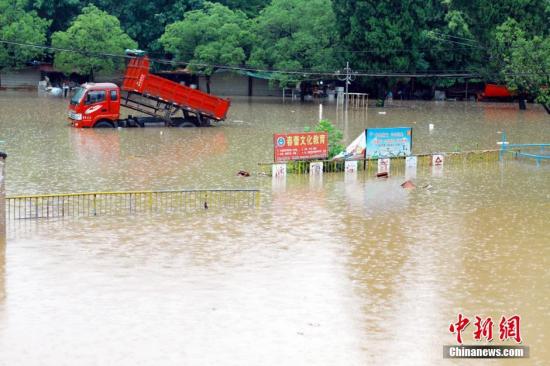
BEIJING, July 11 (Xinhua) According to the website of the Ministry of Civil Affairs, it was approved that in the first half of 2016, floods, wind and hail and geological disasters were the main natural disasters in China, and earthquakes, low-temperature freezing, droughts, snowstorms and forest fires also occurred to varying degrees. All kinds of natural disasters caused a total of 68.775 million people to be affected, 505 people died and 71 people were missing. The affected area of crops was 73.211 thousand hectares, and the direct economic loss was 89.04 billion yuan.
Recently, the Ministry of Civil Affairs and the Office of the National Disaster Reduction Committee, together with the Ministry of Land and Resources, the Ministry of Housing and Urban-Rural Development, the Ministry of Transport, the Ministry of Water Resources, the Ministry of Agriculture, the Health and Family Planning Commission, the Bureau of Statistics, the Forestry Bureau, the Seismological Bureau, the Meteorological Bureau, the China Insurance Regulatory Commission, the Oceanic Administration, the Political Work Department of the Central Military Commission, the China Red Cross Society, China Railway Corporation and other departments, discussed and analyzed the national natural disasters in the first half of 2016.
It is approved that in the first half of 2016, floods, wind and hail and geological disasters were the main natural disasters in China, and earthquakes, low-temperature freezing, droughts, snowstorms and forest fires also occurred to varying degrees. All kinds of natural disasters have caused a total of 68.775 million people to be affected, 505 people were killed, 71 people were missing, 1.643 million people were transferred and resettled urgently, and 1.199 million people needed emergency life assistance; 104,000 houses collapsed and 1.112 million houses were damaged to varying degrees; The affected area of crops is 7321.1 thousand hectares, of which 784.1 thousand hectares will not be harvested; The direct economic loss was 89.04 billion yuan.
In the first half of 2016, natural disasters in the country mainly showed the following characteristics: First, the spatial and temporal distribution of disasters in the country was uneven. More than 1,800 counties (cities, districts) in 30 provinces (autonomous regions and municipalities directly under the Central Government) are affected by natural disasters to varying degrees. Compared with the same period since 2011, the number of dead and missing people is slightly higher, and the rest of the disaster indicators are lighter by more than 20%. In terms of disaster types, earthquake disasters and drought disasters are obviously lighter than normal, low-temperature freezing and snow disasters are the same as normal, floods and geological disasters are slightly heavier, and wind and hail disasters are obviously heavier; From the time point of view, from January to May, the national disaster situation was obviously light. In June, floods, wind and hail and geological disasters occurred suddenly and repeatedly, and the time period was relatively concentrated, and the disaster situation developed extremely rapidly. Regionally, compared with the same period in recent years, the disaster situation in Southwest and Northwest China is obviously lighter, but the disaster situation in East China is relatively heavy. The main disaster indicators are the second highest since 2011, and the number of people missing due to disasters exceeds the average of recent years by more than 2 times.
Second, there are frequent storms and floods in the south, and the pattern of disasters is obvious. Since the flood season began on March 21st, the national average precipitation has been more than 20% higher than normal, which is the highest in the same period of history since 1961. There have been more than 20 regional rainstorm processes in the southern region, which is the highest in the same period of history. There have been more than 20 floods in major rivers, and the total flood volume has been more than 30%. Affected by this, many major floods and geological disasters have occurred in many places in the south. In May, the mudslide in Taining, Fujian Province caused 36 deaths and disappearances. In the first half of June, the Jiangxi, Hunan and Guizhou regions and Anhui and Hubei provinces suffered major floods one after another, which seriously affected the economic and social development of the disaster areas and the safety of people’s lives and property.
In the first half of the year, floods (including geological disasters) caused 34.028 million people in more than 1,000 counties (cities and districts) in 26 provinces (autonomous regions and municipalities directly under the Central Government) to be affected, 367 people died and disappeared due to disasters, and 1.419 million people were resettled urgently; 68,000 houses collapsed and 469,000 houses were damaged to varying degrees; The affected area of crops is 2,636.6 thousand hectares, of which 329 thousand hectares will not be harvested; The direct economic loss was 45.51 billion yuan. Generally speaking, the floods and geological disasters in the first half of the year were basically the same as those in the same period of recent years, showing a pattern of "emphasizing the south but neglecting the north". The main disaster indicators in 13 southern provinces such as Hunan, Guizhou, Jiangxi, Hubei, Anhui and Fujian accounted for more than 70% of the country, and the number of people missing due to disasters accounted for more than 90%.
Third, there are many strong convective weather and the wind and hail disasters are prominent. Since the flood season, there have been 26 large-scale severe convective weather processes in China, which have affected more than 1,100 counties (cities, districts) in 30 provinces (autonomous regions and municipalities directly under the Central Government), ranking the second highest in the same period since 2011. Extreme weather events are obviously more frequent. The number of days of gale stations with magnitude 10 or above exceeds the sum of the past four years, and the number of heavy hail (with a diameter of more than 20 mm) is the highest in the same period since 2011.
In the first half of the year, the wind and hail disaster caused 17.822 million people to be affected, 191 people died and disappeared due to the disaster, and 75,000 people were urgently transferred and resettled; 35,000 houses collapsed and 486,000 houses were damaged to varying degrees; The affected area of crops is 2,142.2 thousand hectares, of which 246.7 thousand hectares will not be harvested; The direct economic loss was 21.4 billion yuan.
Generally speaking, the situation of wind and hail disasters is obviously biased, and the number of people who died and disappeared due to disasters and the direct economic losses are the highest since 2011. Among them, the disasters in Jiangsu, Shanxi, Xinjiang and Corps are the most prominent. On June 23, the tornado and hail disaster in Yancheng, Jiangsu Province killed 99 people. In the first half of June, the wind and hail disaster in Shanxi caused 140 thousand people to need emergency life assistance; In late June, the wind and hail disaster in Xinjiang and Corps caused about 100,000 hectares of crops to be affected (including 30,000 hectares), resulting in serious economic losses.
Fourth, the level of seismic activity is weak and the loss is obviously light. There were 9 earthquakes of magnitude 5 or above in Chinese mainland, including 2 earthquakes of magnitude 6 or above, the number of which was the least in the same period since 2011. The highest magnitude was the linkou county earthquake with a magnitude of 6.4 on January 2, and the Menyuan earthquake with a magnitude of 6.4 on January 21, Qinghai. The provinces where earthquakes with a magnitude of 5 or above occurred involved five provinces (autonomous regions) including Heilongjiang, Yunnan, Xizang, Qinghai and Xinjiang, and Xizang had the most occurrences (four times). Among them, the earthquake with M = 6.4 in Menyuan County, Qinghai Province on January 21st and the earthquake with M = 5.5 in Dingqing County, Xizang Province on May 11th caused the heaviest losses, which totally damaged 89,000 houses in Gansu, Qinghai and Xizang provinces (autonomous regions) to varying degrees, resulting in direct economic losses of 2.63 billion yuan. Overall, the earthquake disaster in the first half of the year was obviously lighter than that in the same period of recent years, and the main disaster indicators were the lowest values in the same period since 2011, and were less than the average value in 2011-2015 by more than 70%.
Fifth, the impact of drought is limited, and low-temperature freezing and snow disasters affect the south. Some areas in Inner Mongolia, North China, Huanghuai and Northwest China have suffered from droughts in spring and summer. Due to the timely rainfall in the later period, the losses caused by drought are obviously lighter than those in the same period of recent years, and the area affected by crops and crops are only about 10% of the average in the same period since 2011. China has suffered many large-scale cold waves, freezing rain, snow and freezing weather processes. Among them, the large-scale low-temperature freezing and snow disaster in the country was the most prominent in late January, with the maximum cooling range of 12℃-18℃. The southern cities such as Guangzhou and Nanning experienced snowfall for the first time in many years. In mid-May, most of the northwest was affected by the continuous strong cold air, and the sudden cooling caused the loss of crops such as corn and wheat to be prominent. In the first half of the year, 13.524 million people were affected by low-temperature freezing and snowstorm, and the affected area of crops was 17.119 thousand hectares, of which 1.577 thousand hectares were rejected and the direct economic loss was 16.71 billion yuan. Generally speaking, the disasters of low temperature freezing and snowstorm are close to the same period in recent years.