The Ministry of Public Security announced the top ten types of telecommunication network fraud with high incidence.
In recent years, the Ministry of Public Security has focused on the telecom network fraud that people hate, comprehensively strengthened the construction of "four specialties and two synergies", and organized public security organs across the country to further promote the prevention and control work with unprecedented efforts and measures, effectively curbing the rapid rise of cases and effectively safeguarding the legitimate rights and interests of the people. At present, the crime situation of telecommunication network fraud is still grim, with 10 common fraud types accounting for nearly 80%, such as billing rebate, false network investment and wealth management, false network loan, impersonating e-commerce logistics customer service, impersonating public security law and false credit reporting, among which billing rebate fraud has the highest incidence rate, accounting for about one third of the cases, and false network investment and wealth management fraud has the largest amount of losses, accounting for about one third of the losses.
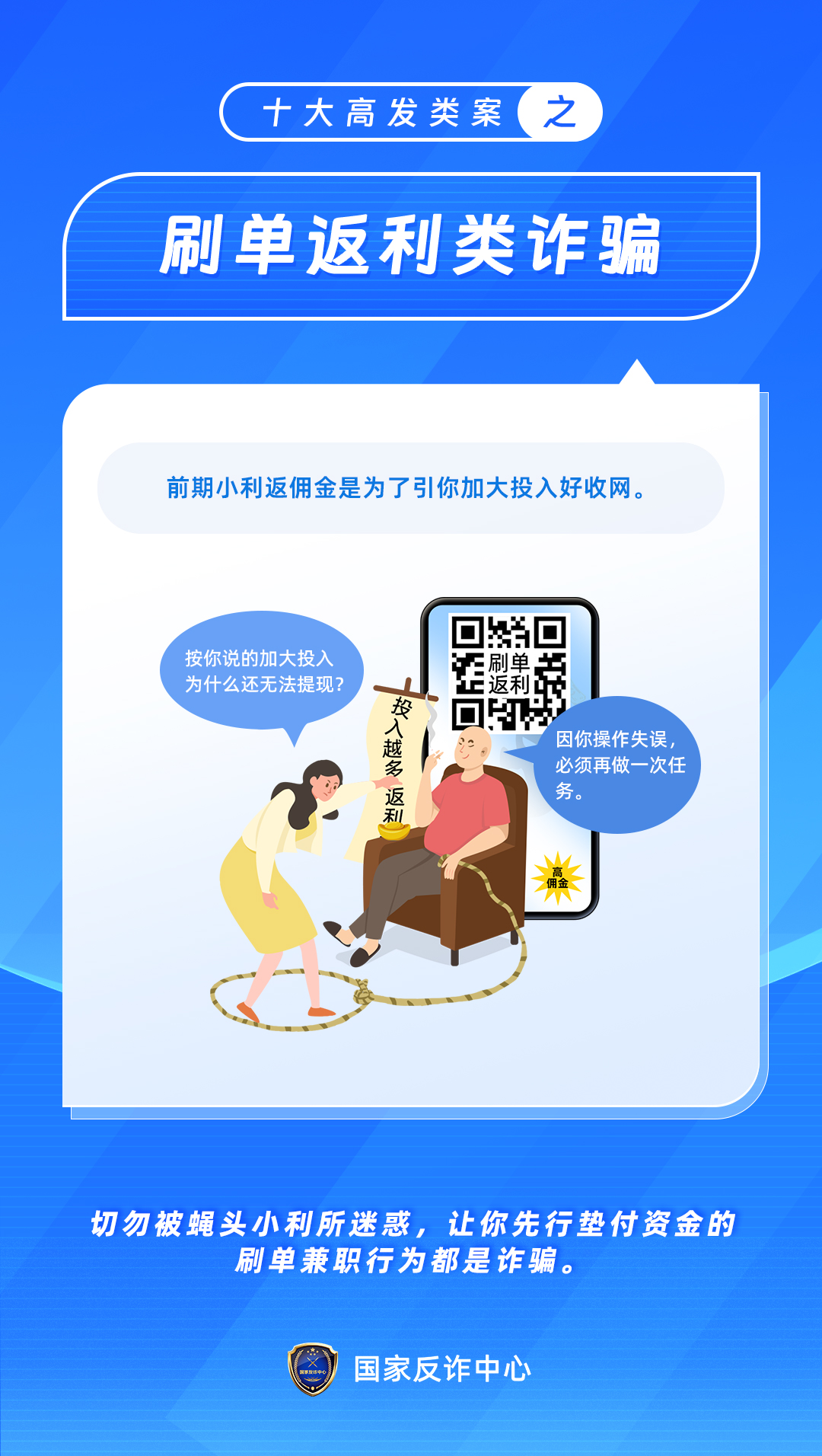
Brush-off rebate fraud
Online rebate fraud has gradually evolved into a major type of fraud with the largest variety and the fastest change. It has become the main drainage method for other complex frauds such as false investment and wealth management, loans, and other illegal crimes such as online gambling and online pornography. Major cases of being defrauded of more than one million yuan have occurred from time to time. Most of the deceived people are school students, low-income groups and unemployed people.
[Typical Case 1] Shao saw the message of "free gift, praise comments and commission return" and the QR code in the WeChat group, scanned the code, contacted the customer service and downloaded an APP as required, and then did the brushing task under the guidance of the receptionist in the APP. After completing five small tasks, I received the corresponding commission, and all of them can be withdrawn to the bank card. Shao Mou started to subscribe for a larger portfolio task list, and invested a total principal of 110,000 yuan. However, after completing the task as required, it was found that it was impossible to withdraw cash. The APP "receptionist" said that Shao’s operation error caused a "card slip" and he had to do another compound task to withdraw cash. Shao only found out that he was cheated at this time.
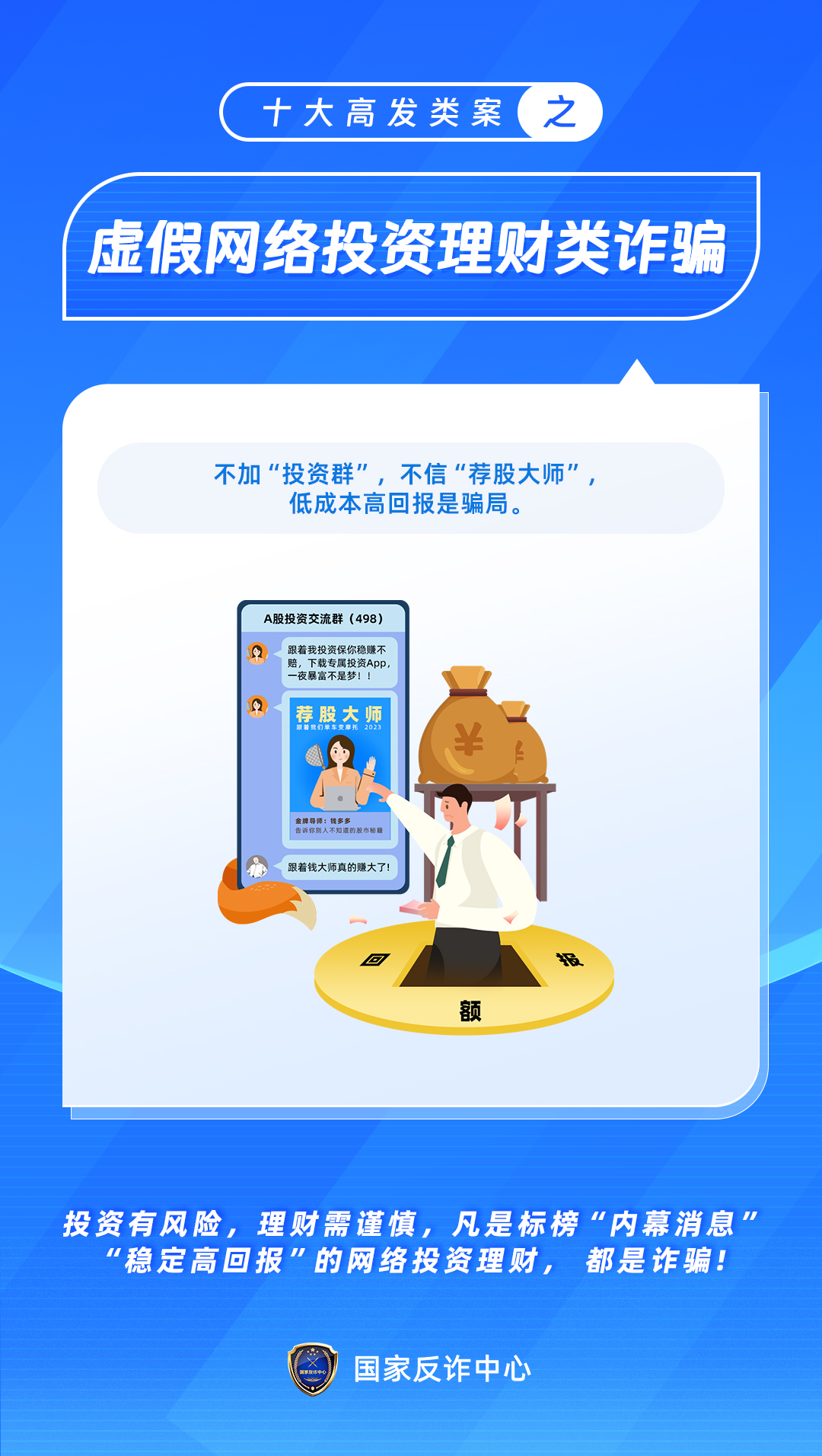
False network investment and wealth management fraud
In such cases, some fraudsters drag the victims into the so-called "investment" group chat in various ways, and then pretend to be investment tutors and financial advisers to send false news of investment success or "live classes" to defraud the victims’ trust; Some determine the marriage relationship with the victim through the dating platform, and then defraud the victim’s trust on the grounds of having special resources and loopholes in the platform to obtain high financial returns. Subsequently, the fraudsters induced the victim to open an account on the false investment platform to invest, and gave the victim a rebate for the small investment in the early stage. Once the victim increased the capital investment, it would be impossible to withdraw cash. Most of the deceived people are single people with certain income and assets or groups keen on investing and stock trading.
[Typical Case 2] While watching the live broadcast of stock trading knowledge on a live broadcast platform, Yu received Friend Request, who claimed to be the anchor. After a private chat, the two sides added QQ friends, and the other party will pull into an investment exchange group in a certain place. When Yu saw other people investing in an APP in the group, he downloaded the APP and made investment operations in the APP according to the instructions of the group administrator. The small-scale experiments were successful and successfully cashed out. When Yu felt profitable, he invested a total of 3.47 million yuan in the APP. Until the end of the month, Yu found that the balance in the APP could not be withdrawn and was blacked out by the other party, only to find that he was cheated.
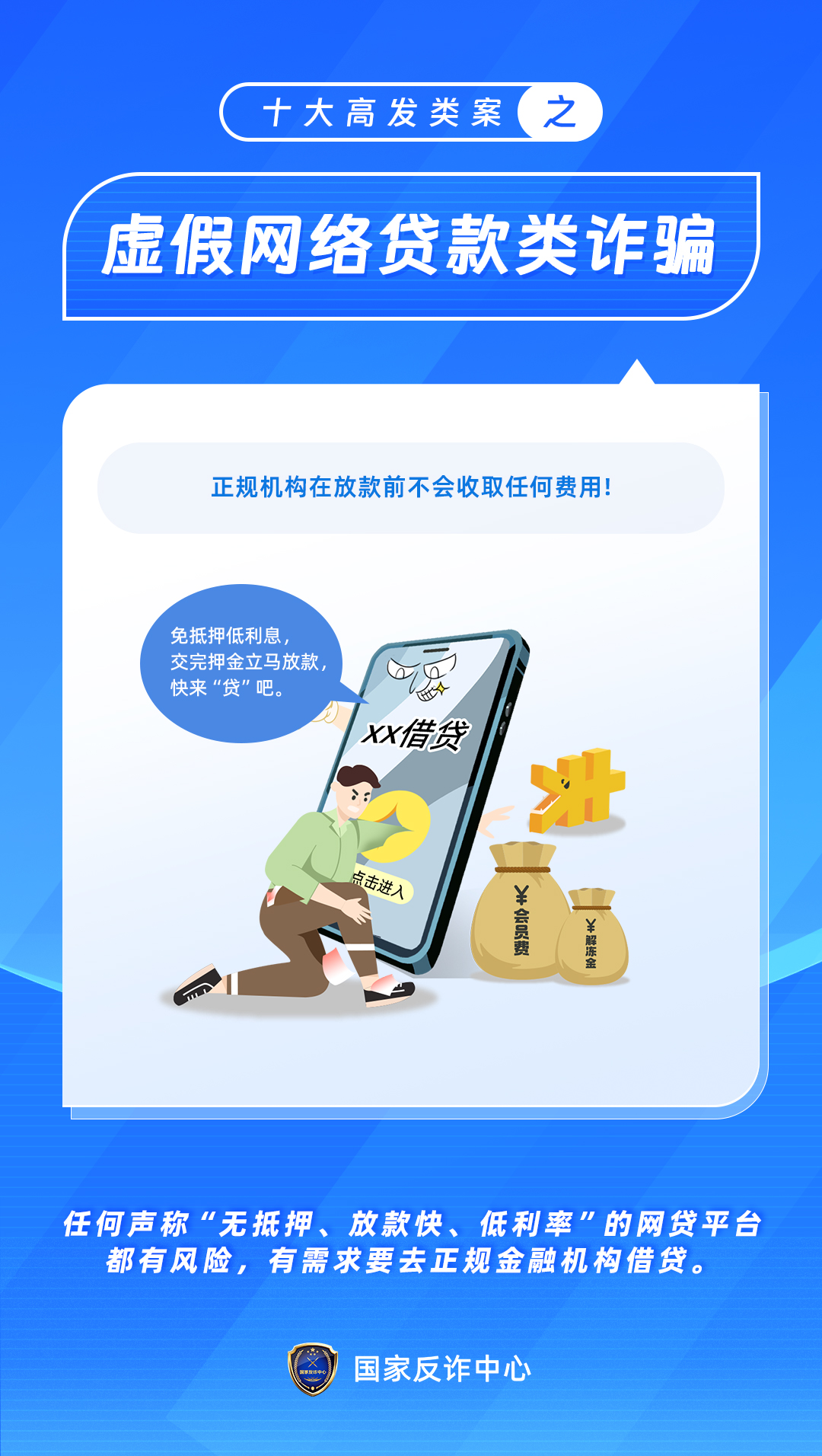
False online loan fraud
Fraudsters post advertising information on handling loans, credit cards and cash withdrawals through online media, telephone calls, text messages, social tools, etc., and then pretend to be employees of banks and financial companies to contact the victims, falsely claiming that they can "mortgage-free", "exempt letters" and "lend quickly" to trick the victims into downloading fake loan apps or logging on fake websites. Then, on the grounds of collecting "handling fee", "deposit" and "agency fee", the victim is tricked into transferring money and remittance. After receiving the victim’s transfer, the fraudster closes the fake APP or fake website and blackes out the victim. Most of the deceived people are people who have urgent loan needs and are in urgent need of money turnover.
[Typical Case 3] Fan received a call claiming to be the customer service of a financial platform and asked if there was a loan demand. Because Fan just needed capital turnover, he added a WeChat friend of the other company and downloaded a "loan" APP. After Fan APPlied for a loan on the app, the other party asked him to transfer money on the grounds of paying membership fees, unfreezing money, and proving repayment ability. After Fan transferred 137,000 yuan to the other party, the other party still said that the loan conditions were not met and he could not lend, and then he lost contact. Fan found that the downloaded APP could not log in, only to find that he was cheated.
Pretending to be an e-commerce logistics customer service fraud
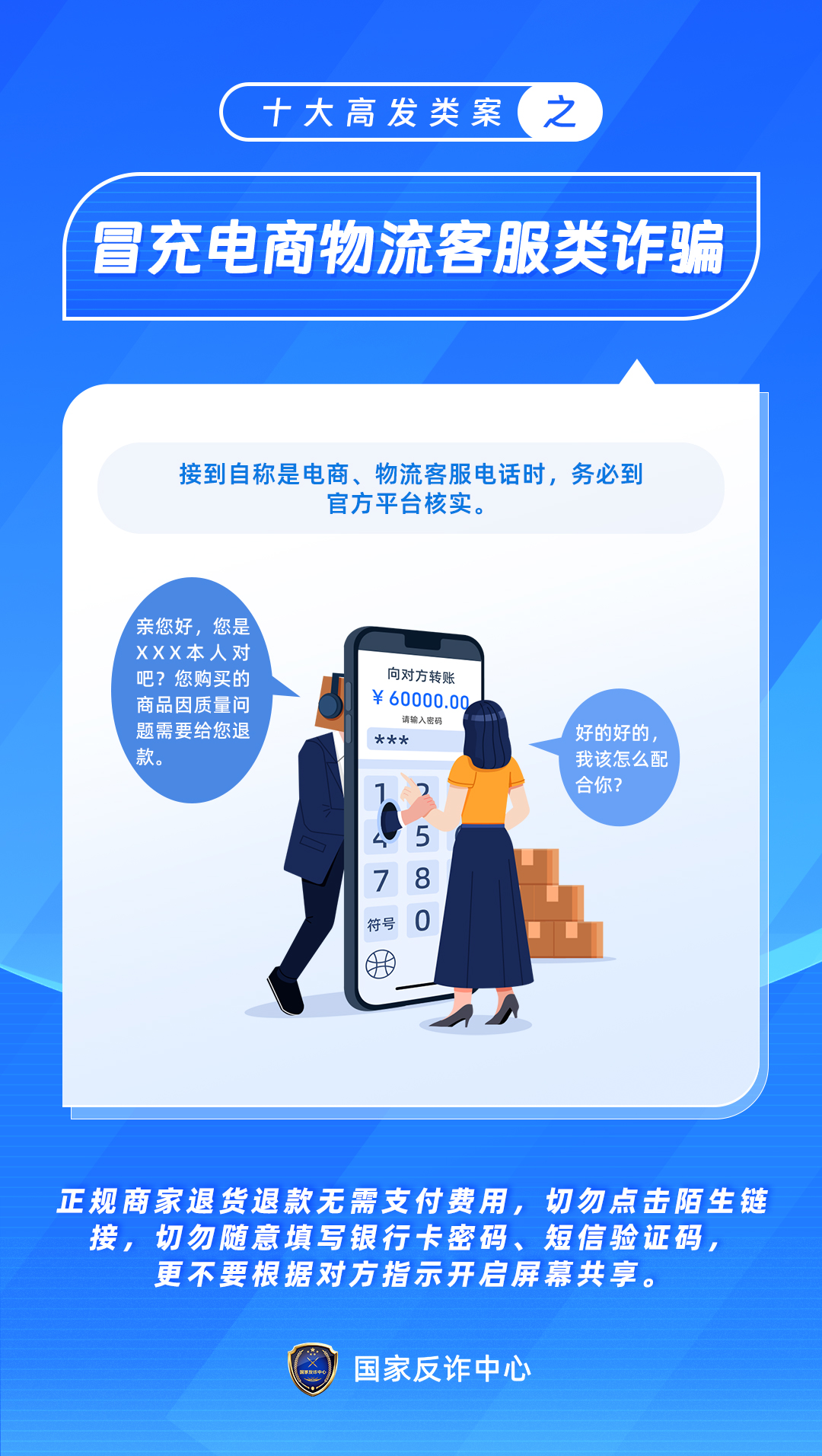
Fraudsters pretend to be e-commerce platforms or customer service of logistics express companies, falsely claiming that the goods purchased online by the victims have quality problems or the goods sold have been taken off the shelves due to violations, and inducing the victims to provide information such as bank cards and mobile phone verification codes on the grounds that they need to pay for "claim refund" or "reactivate the store", and guiding the victims to transfer money and remit money through screen sharing or requesting to download designated apps. Most of the deceived people are consumers who often shop online on e-commerce platforms or shop operators of e-commerce platforms.
[Typical Case 4] Du Mou received a call claiming to be "customer service" of an online shop, saying that the hair dye he bought a few days ago had quality problems, and now he needs to make a refund to Du Mou, and Du Mou believes it. The "customer service" induced Du to download an APP, through which he opened the screen sharing function of the mobile phone and followed the instructions. Subsequently, Du’s mobile phone received a text message that the bank card was transferred to 20,000 yuan, only to find that it was cheated.
Pretending to be a public security fraud
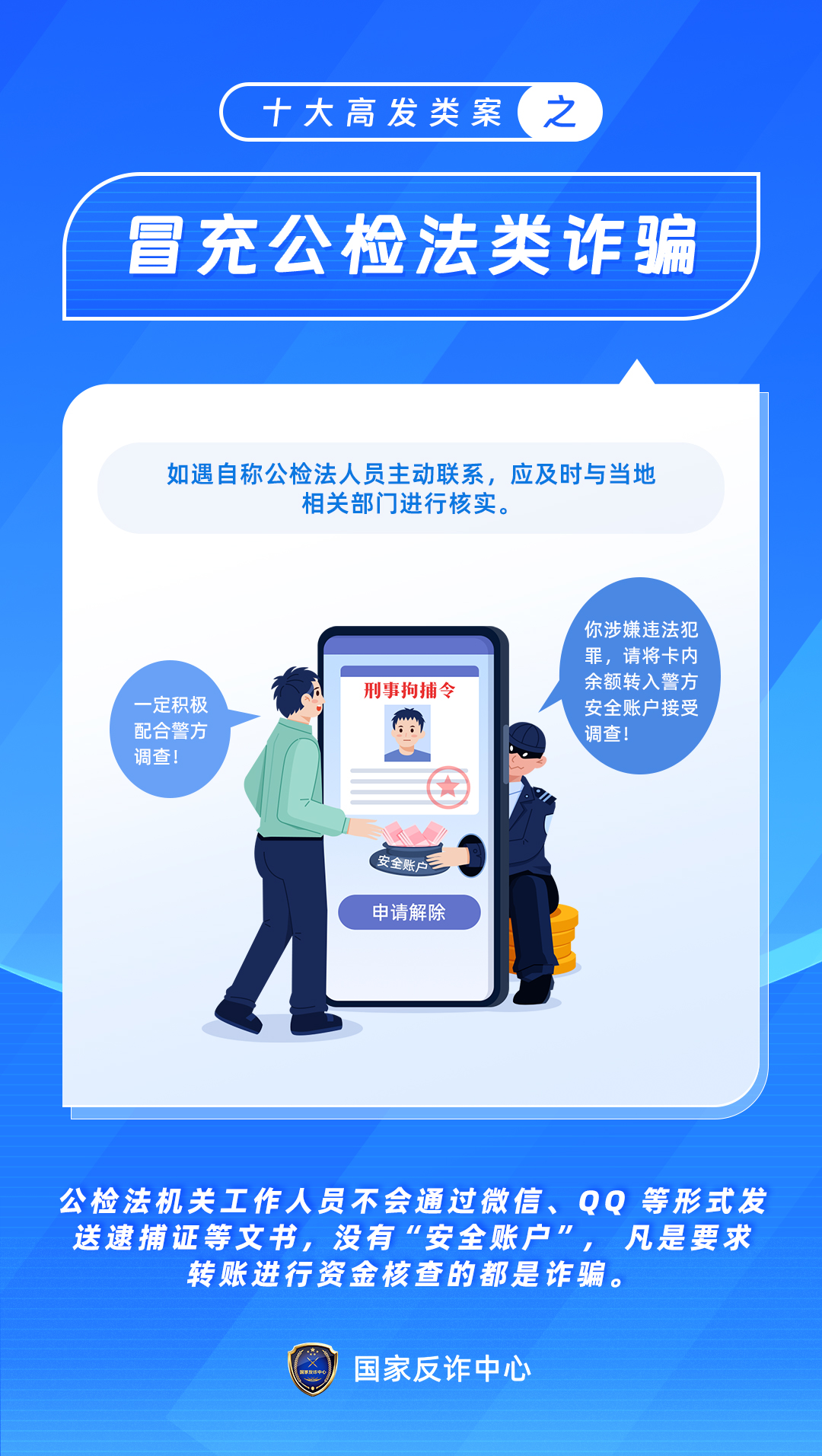
The fraudsters obtained the victim’s personal identity information through illegal channels, then pretended to be the staff of the public security organs, contacted the victim by telephone, WeChat, QQ, etc., threatened and intimidated the victim on the grounds that he was suspected of money laundering, illegal entry and exit, possession of drugs by express delivery, passport problems and other illegal crimes, demanded to cooperate with the investigation and keep it strictly confidential, and showed the victim false legal documents such as "arrest warrant", "wanted order" and "property freezing book" to increase credibility. At the same time, the victim is required to go to a closed space such as a hotel, "cooperate" with his work under the condition of blocking contact with the outside world, and transfer the funds to a "safe account" to commit fraud.
[Typical Case 5] Yang received a phone call claiming to be a policeman of Shanghai Public Security Bureau, claiming that a bank account under Yang’s name was suspected of illegal money laundering and asked him to go to Shanghai Public Security Bureau for handling. Yang said that he couldn’t go. The other party asked him to add QQ friends and sent a file showing Yang’s photos, which contained content such as being sentenced for money laundering. Yang was afraid. Subsequently, the other party asked Yang to cooperate with the investigation in the unoccupied room on the grounds of involving police secrets, and said that if Yang wanted to remove the suspect, he needed to transfer all the money in the card to a "safe account", and the money would be returned after the case was found out. Yang then transferred 50,000 yuan to the bank account provided by the other party. Later, due to the request of the other party to delete all chat records, Yang discovered that he was cheated.
False credit fraud
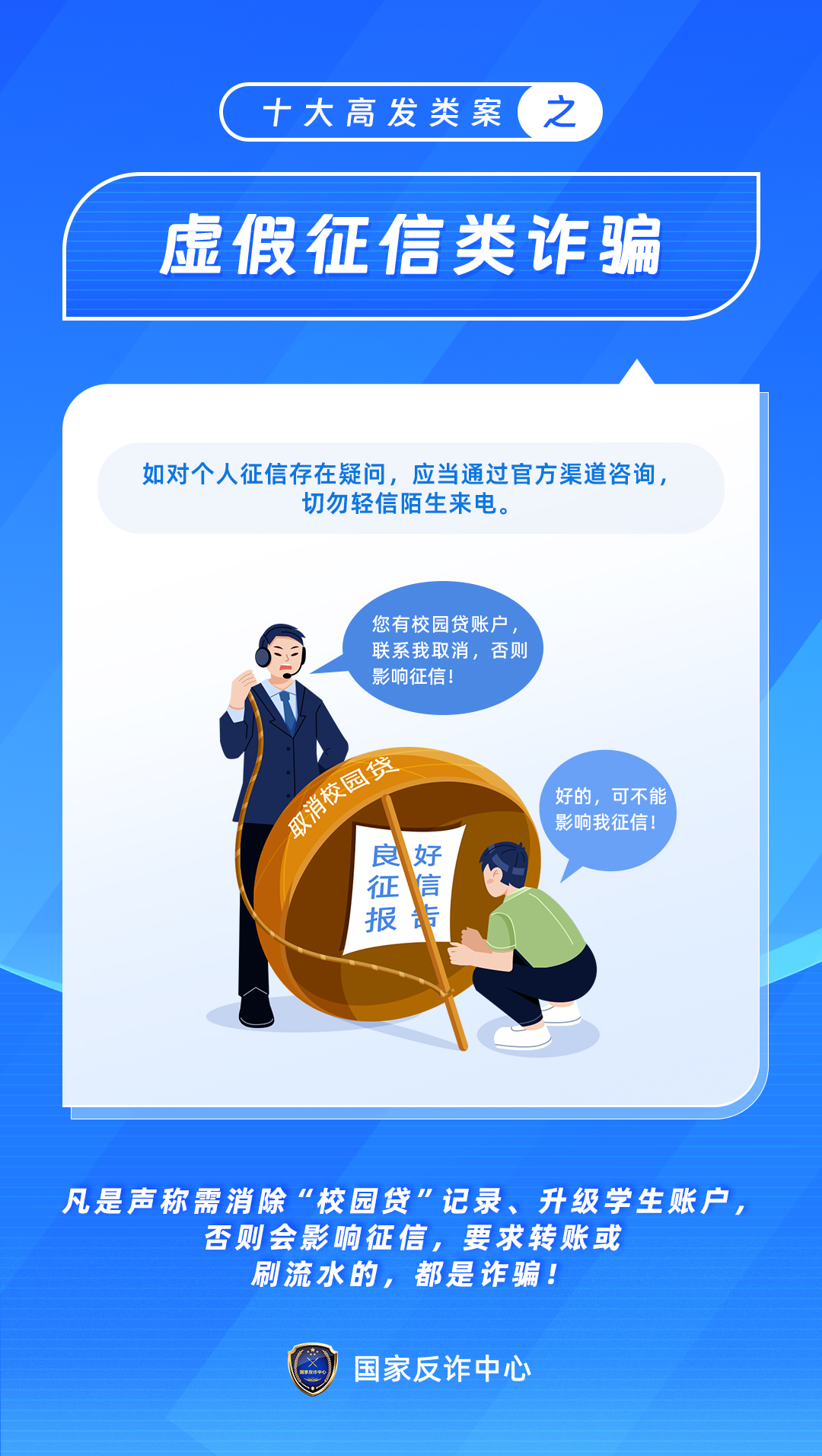
Fraudsters pretend to be banks, China Banking and Insurance Regulatory Commission staff or online loan platform staff to establish contact with the victims, falsely claiming that the accounts previously opened by the victims through campus loans, student loans, etc. have not been cancelled in time, and the relevant accounts need to be cancelled; Or lie that the victim’s credit payment tools such as credit cards, flower beds, and borrowing beds have bad records, and it is necessary to eliminate relevant records, otherwise personal credit information will be seriously affected. Subsequently, on the grounds of eliminating bad credit records and verifying running water, fraudsters induced victims to make loans on online loan platforms or Internet finance apps, and transferred the money to their designated accounts, thus committing fraud.
[Typical Case 6] Wang received a phone call from a staff member who claimed to handle high-interest loans in China Banking and Insurance Regulatory Commission. The other party said that Wang had a bad record caused by loans overdue, which would affect his personal credit information. After some communication, Wang believed the identity of the other party and transferred money to three different accounts of the so-called "China China Banking and Insurance Regulatory Commission Certified Docking Account" three times, totaling 250,000 yuan, of which 230,000 yuan was the money borrowed by Wang from three financial platforms. "What other bank cards and loan apps have you used?" When the other party repeatedly asked this question, Wang just woke up and realized that he had been cheated.
False shopping and service fraud
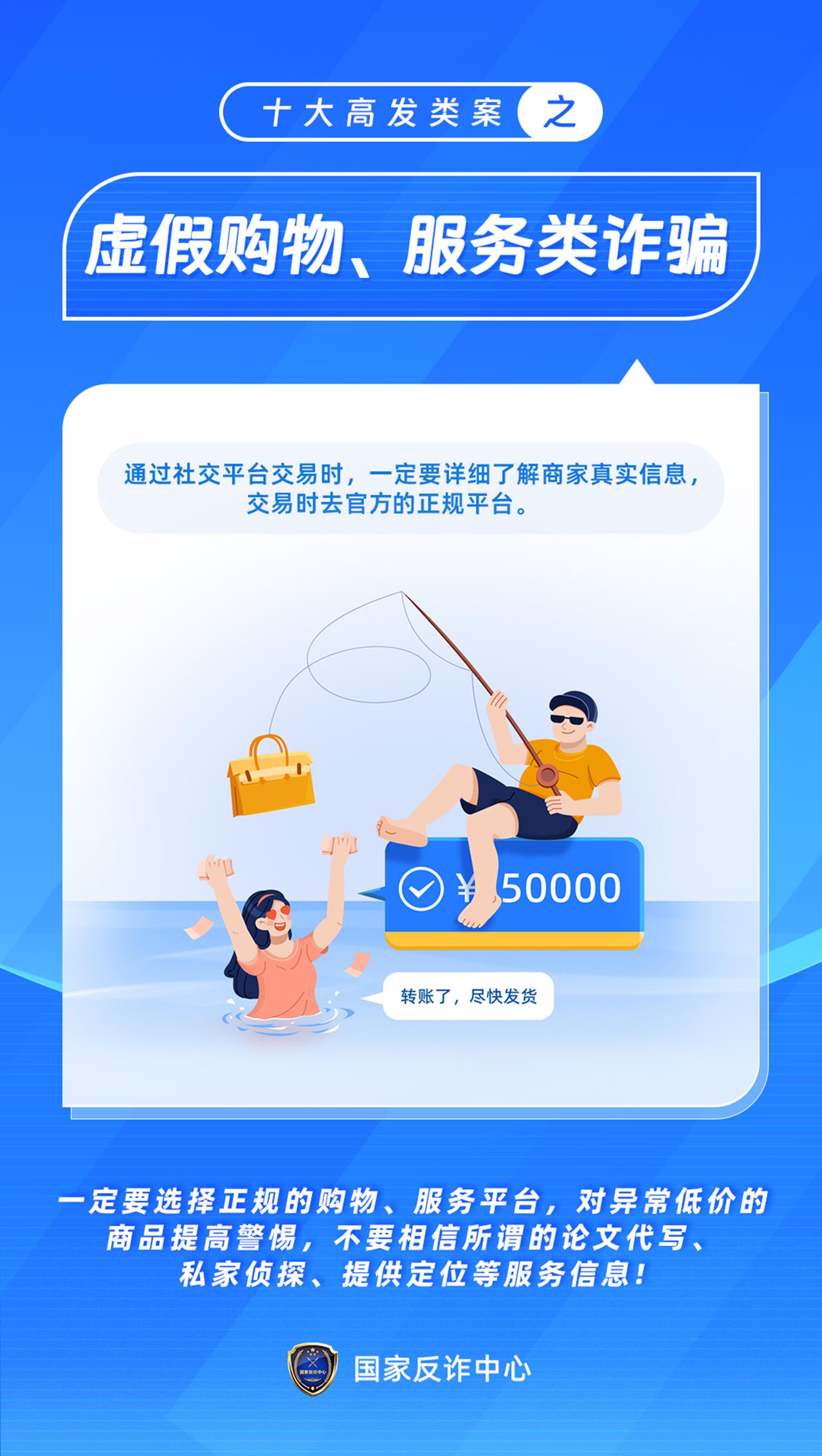
The fraudsters posted advertisements such as "low price discount", "overseas purchasing" and "shopping in 0 yuan" on WeChat group, friends circle, online shopping platform or other websites, or provided advertisements of special services such as "writing papers", "private detectives" and "tracking and positioning" to attract the attention of victims. After getting in touch with the victim, the fraudster induced him to add friends through WeChat, QQ or other social software for discussion, and asked for private transfer on the grounds that private transactions could save "handling fees" or be more convenient. After the victim pays, the fraudster will trick the victim into continuing to transfer money and remit money on the grounds of paying customs duties, deposits, transaction taxes and handling fees, and then blacken the victim afterwards.
[Typical Case 7] Li saw an advertisement for selling a valuable liquor on the Internet, so he added the details as a WeChat friend according to the contact information left by the other party. The other party claims to be a factory direct seller, and can provide internal prices, but it needs to be traded privately. After agreeing on the price, Li transferred 11,000 yuan to his account. A few days later, when Li asked the other party for logistics distribution information, he found that he was blacked out and found that he was cheated. In order to find a liar, Li added a self-proclaimed private detective as a friend after searching for a private detective on the Internet. The other party said that he could find someone for Li through his mobile phone, but he had to pay 10,000 yuan of labor fee first. After transferring 10,000 yuan to the account provided by the other party, Li found that he was blacked out again and was deceived twice.
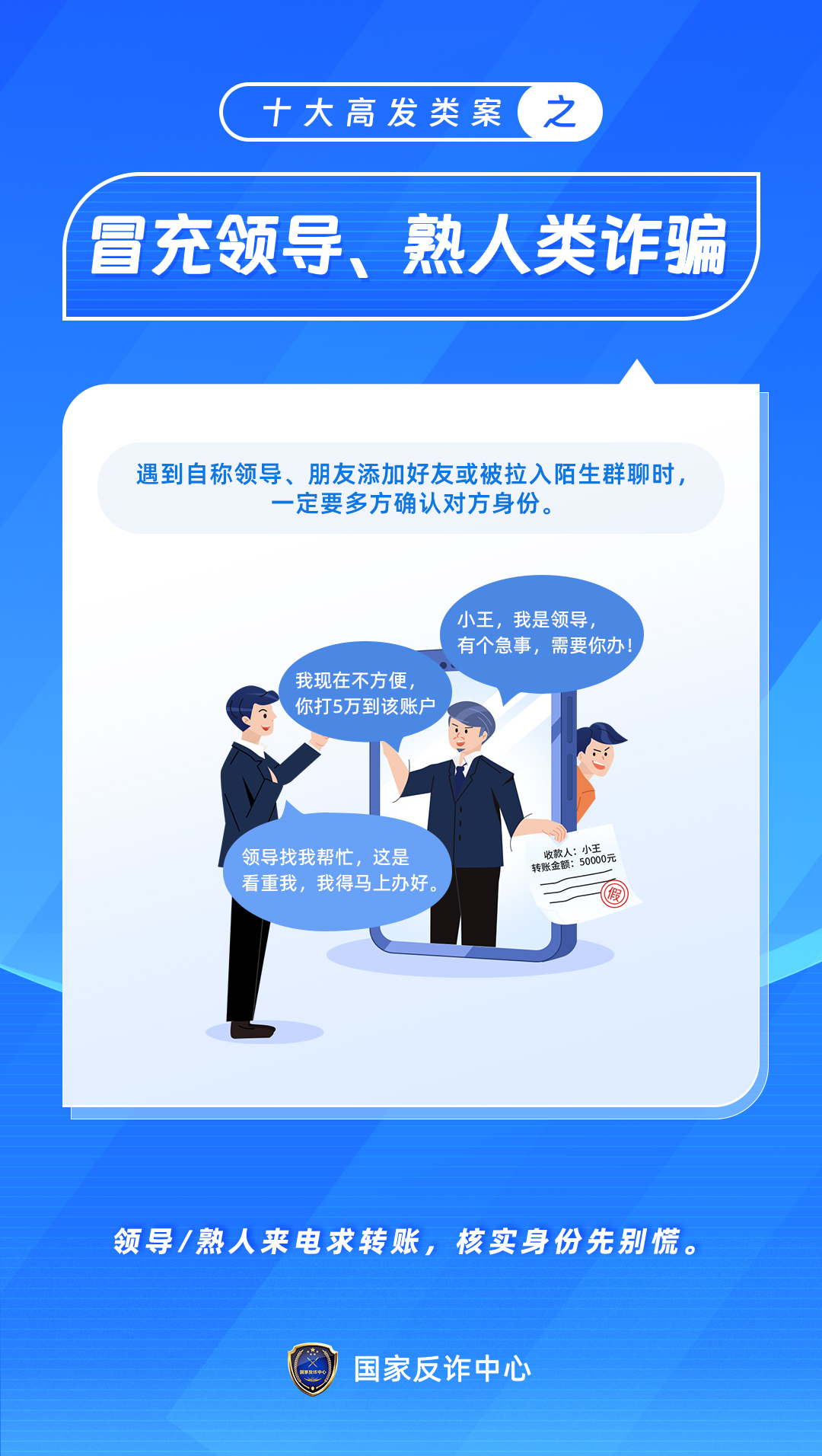
Pretending to be a leader and being familiar with human fraud
Fraudsters use the photos and names of the victim’s leaders, acquaintances or children’s teachers to "package" social accounts, add the victim as a "fake" friend, or pull it into WeChat chat groups. Subsequently, the fraudsters expressed concern for the victims as leaders and acquaintances, or imitated the tone of leaders, teachers and others to defraud the victims. Then ask the victim to transfer money to the designated account on the grounds that it is inconvenient to come forward and answer the phone, and constantly urge the victim to transfer money as soon as possible on the pretext of time constraints, thus implementing fraud.
[Typical Case 8] Li’s QQ account was pulled into a work group by fraudsters, and the names of the members in the group were all staff members of the company, so it was not verified again. A few days later, Li received a group message: the "general manager" pretending to be a liar said that he needed to pay the other party’s project money and asked Li to check how much money was left in the company account. After Li checked the funds in the company’s account, the "general manager" impersonated by the liar asked Li to transfer all the funds in the account to the other party’s designated account, and urged Li to transfer money quickly on the grounds of urgency. For fear of offending the "leader", Li transferred all 400,000 yuan from the company’s account. After the general manager of the company received a short message from the bank, Li found out that he was cheated.
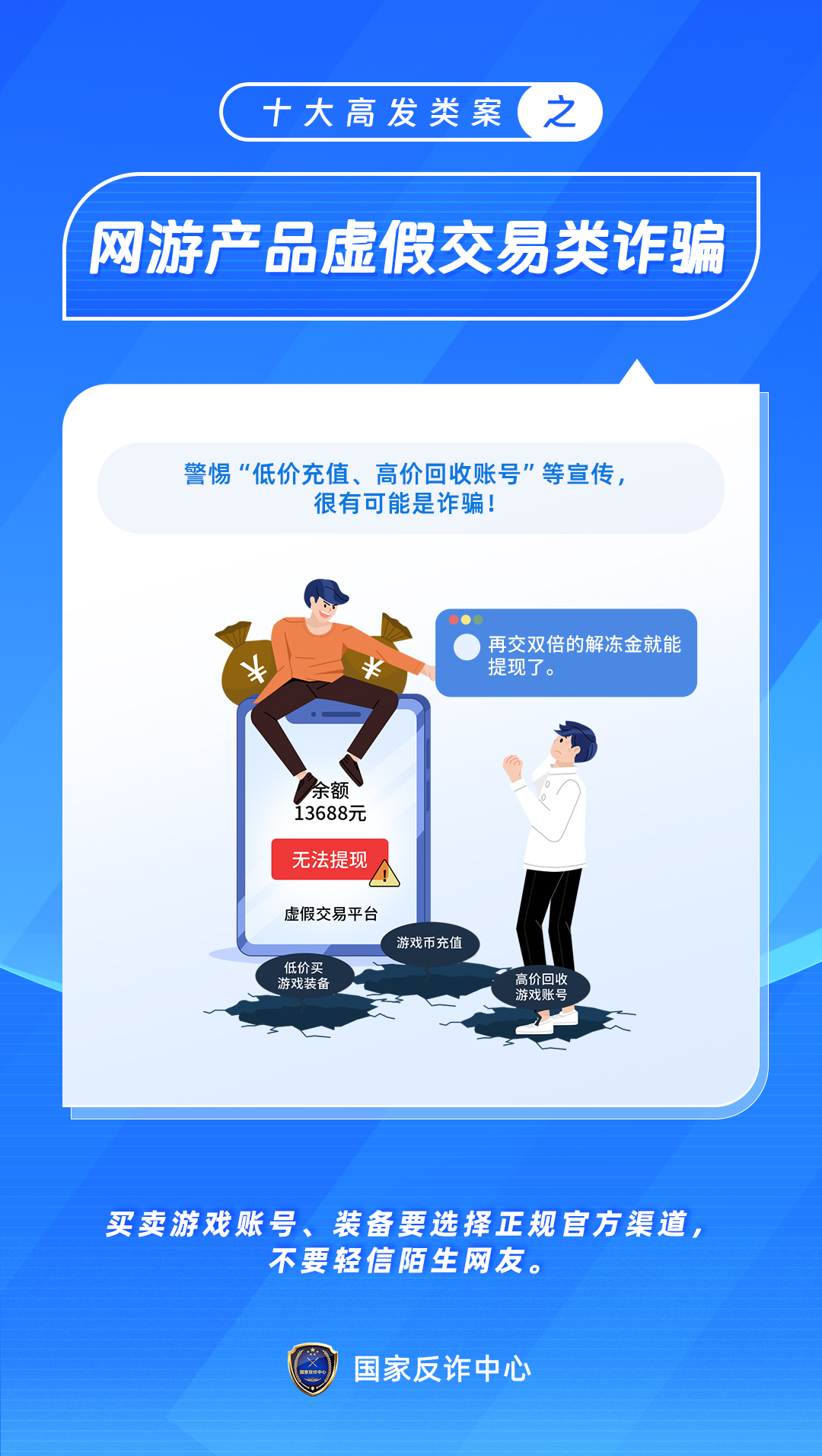
Fraudulent trading of online game products
Fraudsters publish advertisements for buying and selling online game accounts, props and cards on social and game platforms, or get game props for free and at low prices, participate in lottery activities and other related information. After the victim actively contacts with him, the fraudster induces the victim to bypass the formal platform and conduct private transactions with him on the grounds that private transactions are cheaper and more convenient; Or ask the victim to add a so-called customer service account to participate in the lucky draw, and ask the victim to pay "registration fee", "unfreezing fee" and "membership fee" on the grounds of operational mistakes and insufficient grades, and then the victim will be blacked out after success.
[Typical Case 9] When playing a game, Shen saw a message in the game chat box "Join the group and get game props for free". After applying for joining the group, a person with the net name "dispatcher" told Shen that he could get a lot of game benefits by scanning the QR code in the group. After Shen used WeChat to scan the QR code and fill in the relevant information, the webpage suddenly showed that WeChat would be frozen, and Shen contacted the "dispatcher". The other party said that Shen had improperly operated and pushed a person named "Handler" to him. The "processor" said that it is necessary to prove that WeChat is my use through transfer, and all funds will be refunded after verification. At the request of the other party, Shen transferred 18,000 yuan to the designated account, only to be found cheated after being blacked out by the other party.
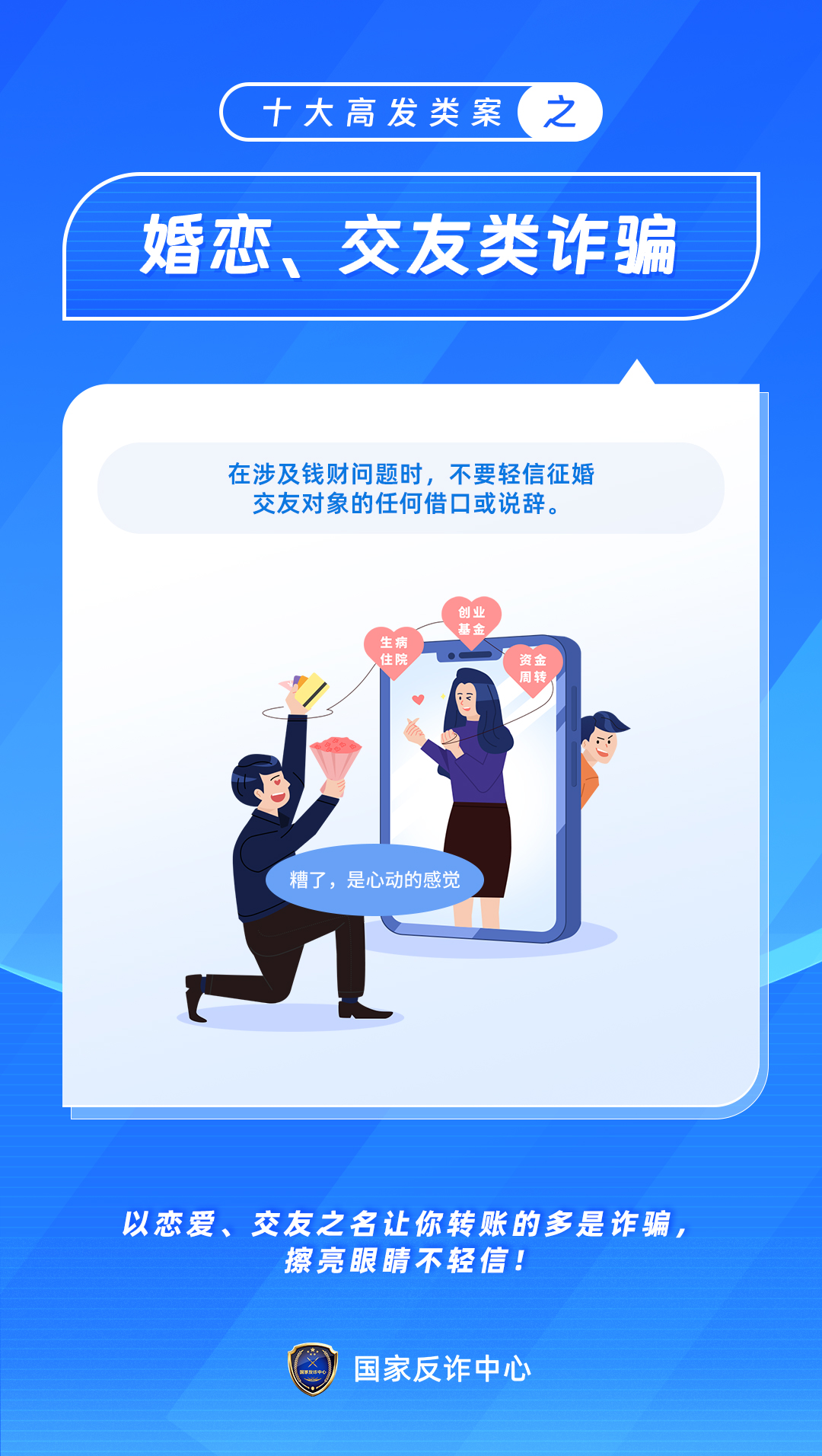
Marriage and dating fraud
Fraudsters collect a large number of self-portraits and life photos of "Bai Fumei" and "Gao Fushuai" through the Internet, create different identity images according to the scripts, and then publish personal information on dating websites. After establishing contact with the victim through social software, fraudsters use photos and pre-designed false identities to defraud the victim’s trust, and operate the love relationship with the victim for a long time. Subsequently, the fraudsters demanded money from the victims on the grounds that they were in urgent need of money and helped the fund turnover of the project, and constantly changed their reasons to ask them to transfer money according to the financial situation of the victims until the victims found out that they were cheated.
[Typical Case 10] Ms. Xie met a "foreign soldier" on the Internet. The other party claimed to be a military doctor stationed in a certain country and liked China culture very much. She hoped to settle in China in the future. In the process of chatting with this "soldier", Ms. Xie was gradually moved by the elegant conversation and daily concern of the other party, and confirmed the love relationship with the other party without meeting each other. "Soldier" said that he would transfer all his property to China so that he could live with Ms. Xie, but because she was intercepted by the customs, she needed Ms. Xie’s help to pay a fee to get through. Ms. Xie transferred 50,000 yuan to the account provided by her, and then transferred more than 400,000 yuan to the bank account provided by the other party because of the need to pay "thawing fee" and "handling fee", until she was blacked out by the other party, and Ms. Xie found out that she was cheated.