If you have never been to this country, you have not experienced a real "poor tour"
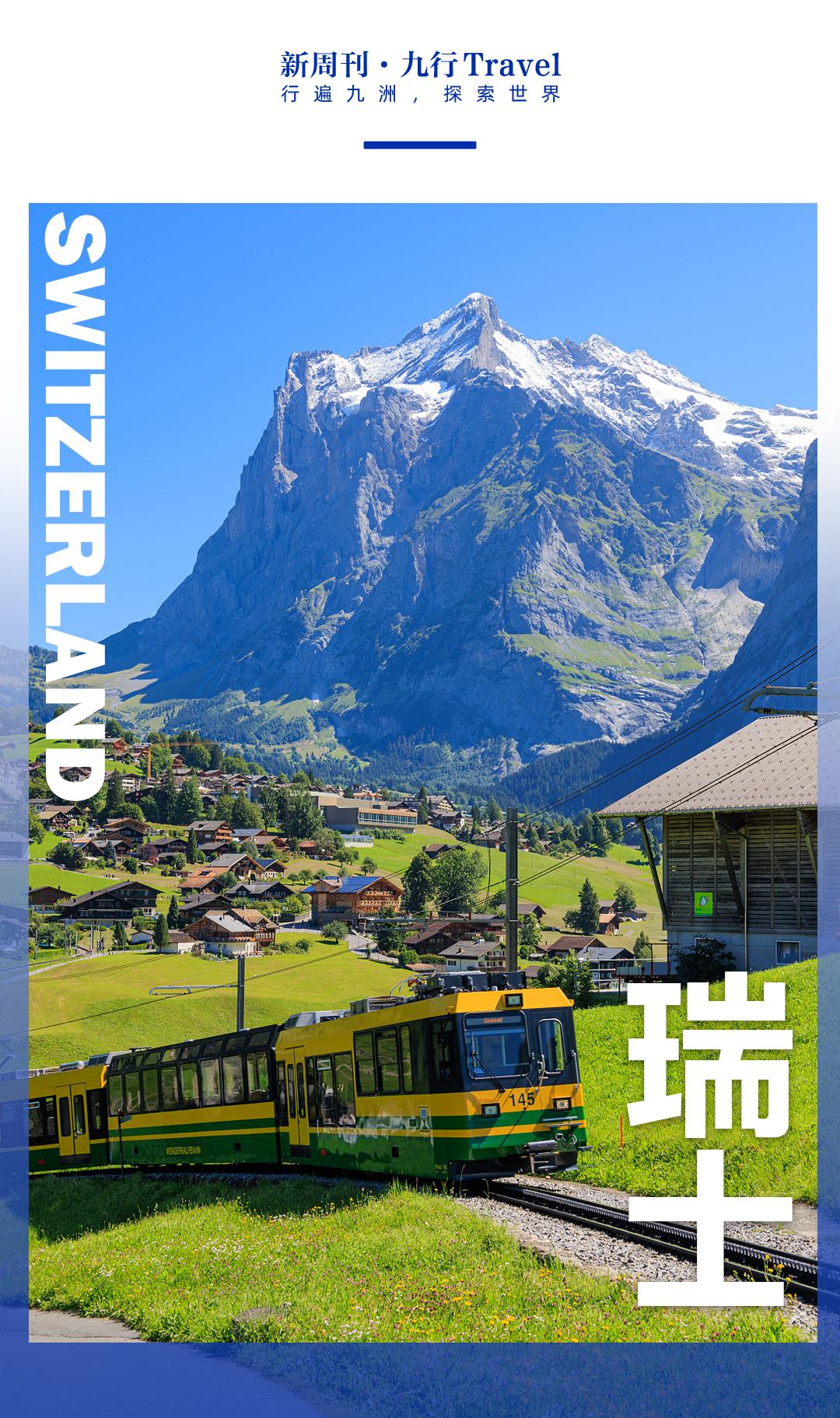
In the circle of travelers, there is a popular saying: the ceiling of tourist scenery is Switzerland.

However, this sentence has another meaning: the expenses here are also at the top level. Switzerland ranks among the countries with high cost of living all the year round, and its currency, the Swiss franc, is also one of the strongest currencies in the world.
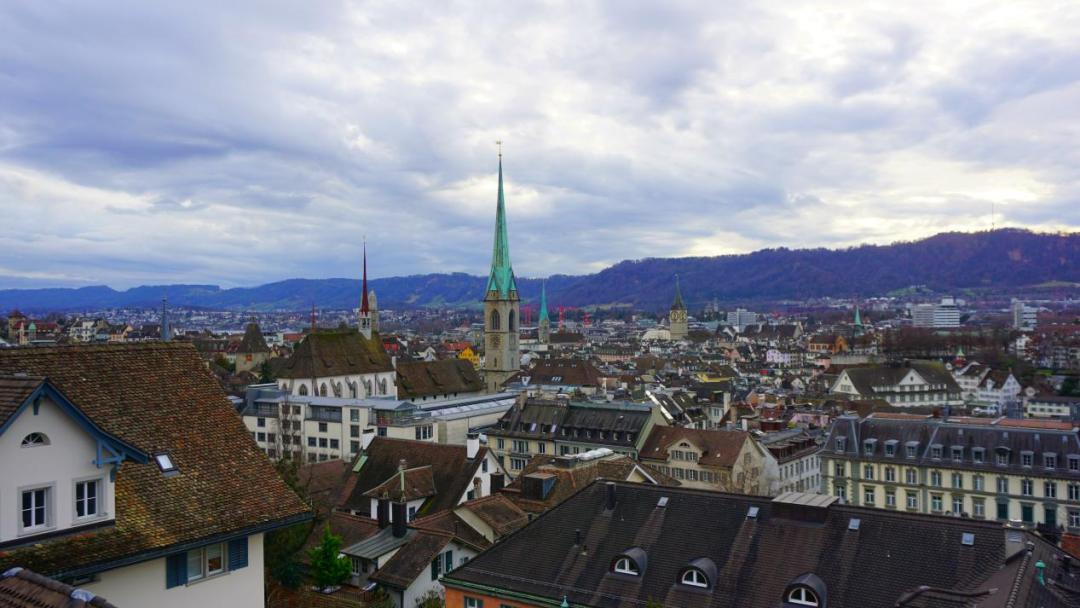
△ Although the cost of living is high, Zurich is also considered as one of the most livable cities in the world. (Photo/photo by Yu Yutao)

It is said that there is one millionaire in every 22 locals in Switzerland, and the per capita salary is equivalent to more than 55,000 yuan. If the monthly income is less than 25,000 RMB, it can already be classified as a low-income group.

Such a rich income naturally brings a very high level of consumption. Traveling here is not only a unique enjoyment for the eyes, but also a Du Jie for the wallet. When I went to Switzerland, I found that I would really be laughed at by myself.

There is no tip in Switzerland.

Almost everything is expensive.

Some people joked that Swiss prices are "the highest in the world", which is true.

Different from other European and American countries, there is basically no habit of tipping in Switzerland-according to the federal constitution, the service charge is already included in the consumer price in most places. You don’t have to worry that the waiter will bring inconvenience to yourself because he can’t get enough pay. Besides, everything in Switzerland is inseparable from money.

Among the ten cities with the highest cost of living in Europe in 2023 selected by Numbeo, a world-renowned data website, the top eight are firmly occupied by Switzerland. Among them, the most well-known places-Zurich, Geneva, Lucerne, Basel and Lugano are all on the list.
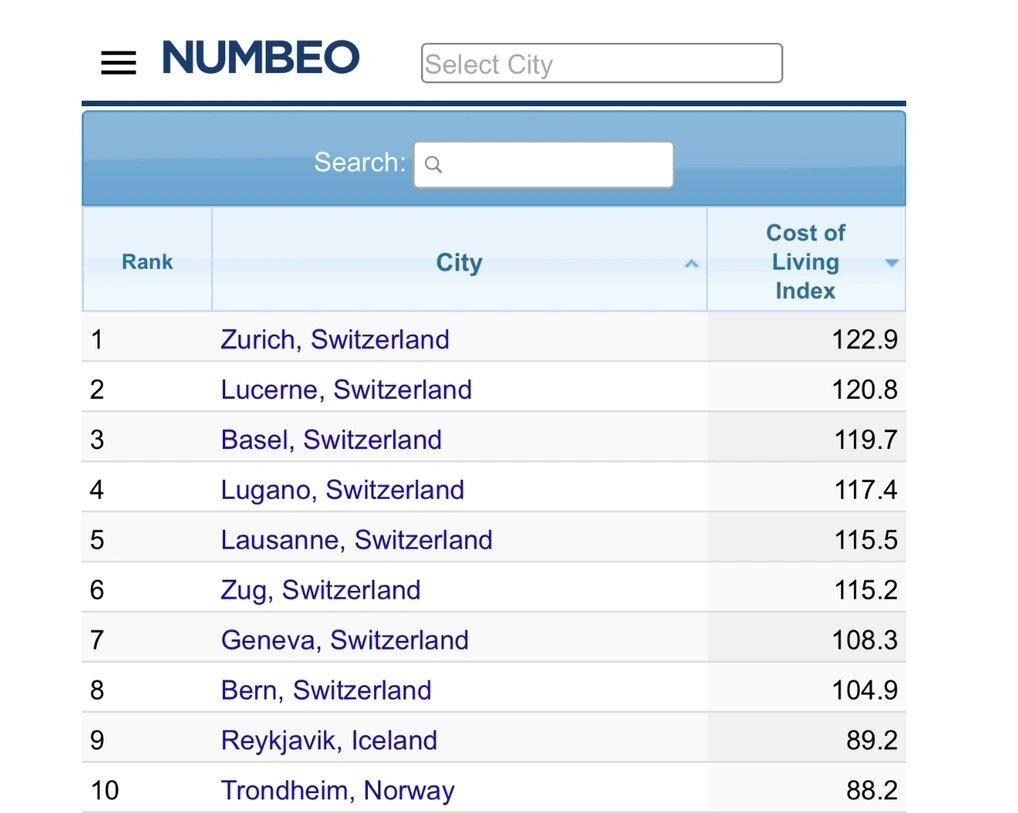
△ List of cities with the highest cost of living in Europe in 2023. (Figure/website screenshot)

According to statistics, the price level in Switzerland is 61.5% higher than the average level in the EU. Some bloggers have printed their own bills for buying the same products in Switzerland and Germany, and the prices are twice as different.

In Switzerland, seeing the numbers on the price tag often makes people feel their heart beat faster. On the first day I arrived, I felt the blow of high local prices. The first time I walked into a local restaurant, I thought I was in a "black shop".

For example, when I opened the menu, I found that a bowl of beef noodles costs nearly RMB in 200 yuan, a plate of spaghetti costs RMB in 230 yuan, and a cup of coffee costs RMB in 80 yuan. Even if you just want to eat two jiaozi, you may have swallowed more than 100 RMB with one bite.

I woke up after comparing many restaurants, and I really blamed it wrong-it turned out that every restaurant in Switzerland was a "black shop".
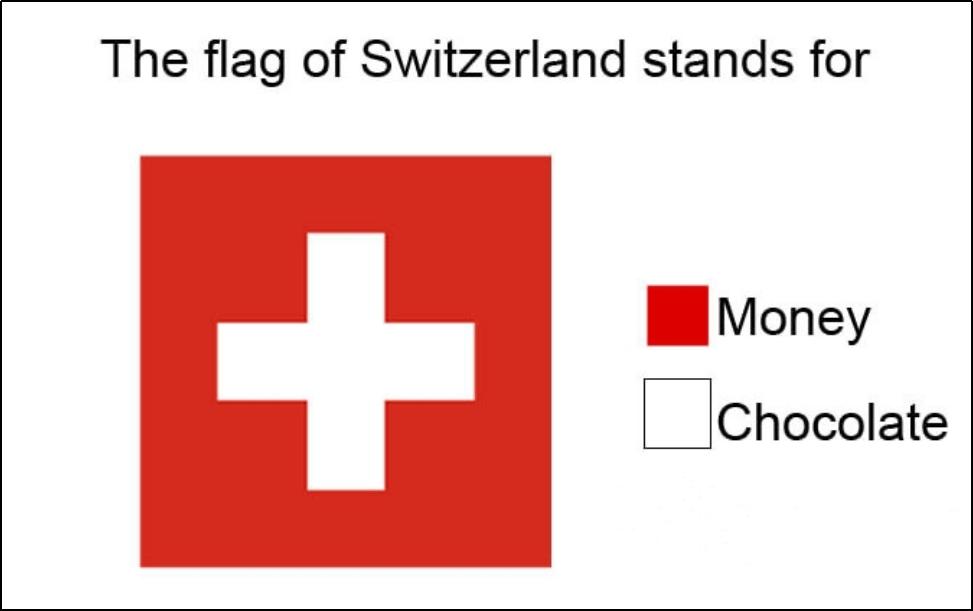
△ Network stem map: "What does the Swiss flag stand for? Most money and a little chocolate. " (Figure/website screenshot)

If you want to enjoy a Chinese meal, it is even more "bleeding". Order three ordinary home-cooked dishes, and you will receive a huge bill-Shenghui 600-700 yuan RMB when you check out.

In addition to eating, every trip in Switzerland is also a huge test of the wallet. As we all know, taking the Swiss railway is one of the best ways to enjoy the beautiful local scenery, and its public transportation is famous for its efficiency, punctuality and comfort.

But the "cost" is also very obvious: to buy the cheapest one-day transportation ticket, it will cost nearly 400 yuan RMB.

You know, this is the level of monthly ticket in most European cities outside Switzerland.
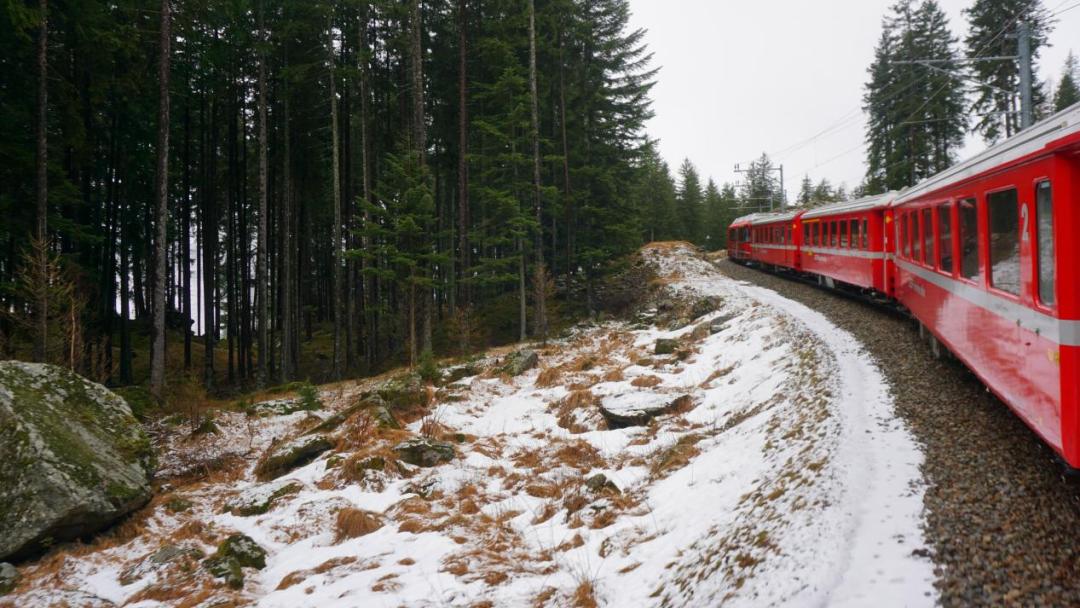
△ The world-famous Swiss railway has a sky-high fare. (Photo/photo by Yu Yutao)

It is more expensive to take a taxi here. According to the survey of Taxi2Airport, a global airport taxi booking platform, the taxi fare in Switzerland is unmatched in the world-measured by the average price per kilometer, it is as high as 175 yuan, almost twice that of Japan, the second place.

If you carry luggage, you have to pay an extra fee. Unless you plan to leave your luggage in the local area and wander alone.

Such high prices are unbearable for the well-paid Swiss people. Some Swiss people sarcastically said that high prices are the best weight-loss plan to help them keep fit. Anyway, wages will never keep up with the soaring prices.

Sitting by the lake in Zurich, a local frankly revealed to us the survival way of ordinary Swiss people-giving up restaurants and returning to their own kitchens. Just because of this, the prices are ridiculously expensive wherever people sit down and provide services. On weekends, they would rather drive for an hour or two to buy ingredients in neighboring cities than eat out at will.

Rich "low-key",

A Swiss who is "ostentatious"

If you think that wealthy Swiss don’t need to save money, it’s all wet.

It has long been popular and common for Swiss people to drive regularly to neighboring countries for shopping. In order to reduce the cost of living, some office workers even take the initiative to live in neighboring France or Germany for a long time, preferring to travel back and forth across borders twice a day rather than bear the high local prices.
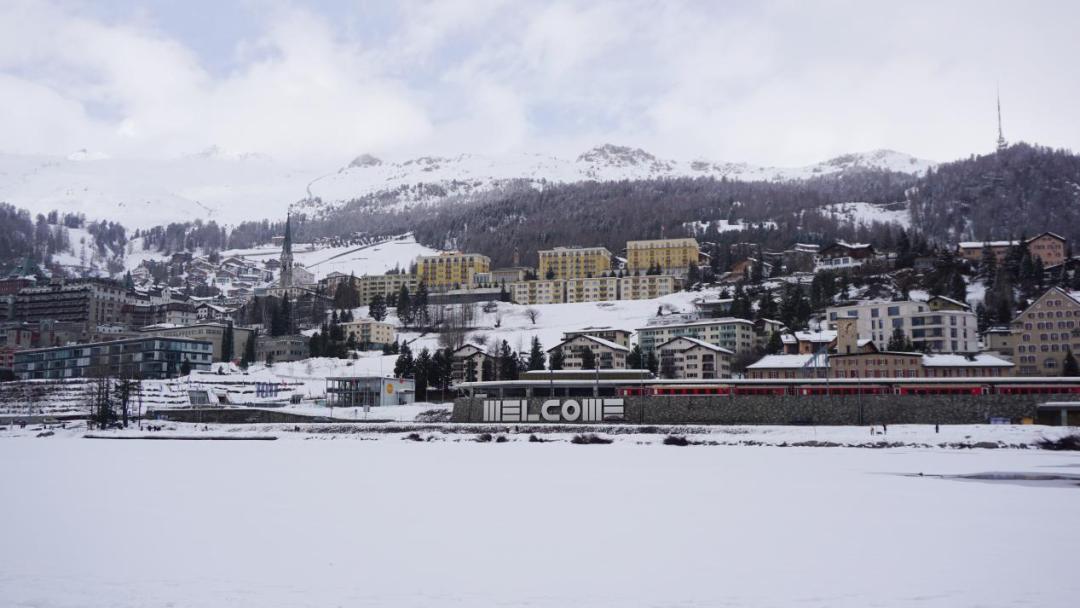
△ synonymous with Swiss exquisite life: St. Moritz. (Photo/photo by Yu Yutao)

Walking on the most prosperous banhoff street in Zurich, it’s hard for you to see local people wearing famous brands. On the contrary, people who walk their dogs in ordinary clothes on the street, or carefully choose cheap and good products in supermarkets, may be invisible rich.

In some life forums in Switzerland, there are many shopping guides about going to the borders of neighboring countries, including driving/transfer routes, where to park, and where to shop more cost-effectively.

Konstanz, a small town located on the border between Germany and Switzerland, welcomes a wave of Swiss people who come to shop specially every year. Although it takes several hours to drive, almost half of Swiss residents come here to shop at least once a year.

In addition to the price gap, shopping here can also enjoy the exchange rate difference between the euro and the Swiss franc. In addition, since Switzerland has not joined the European Union, Swiss residents can enjoy preferential tax refund policies in konstanz as long as the amount on a shopping list exceeds a certain amount.
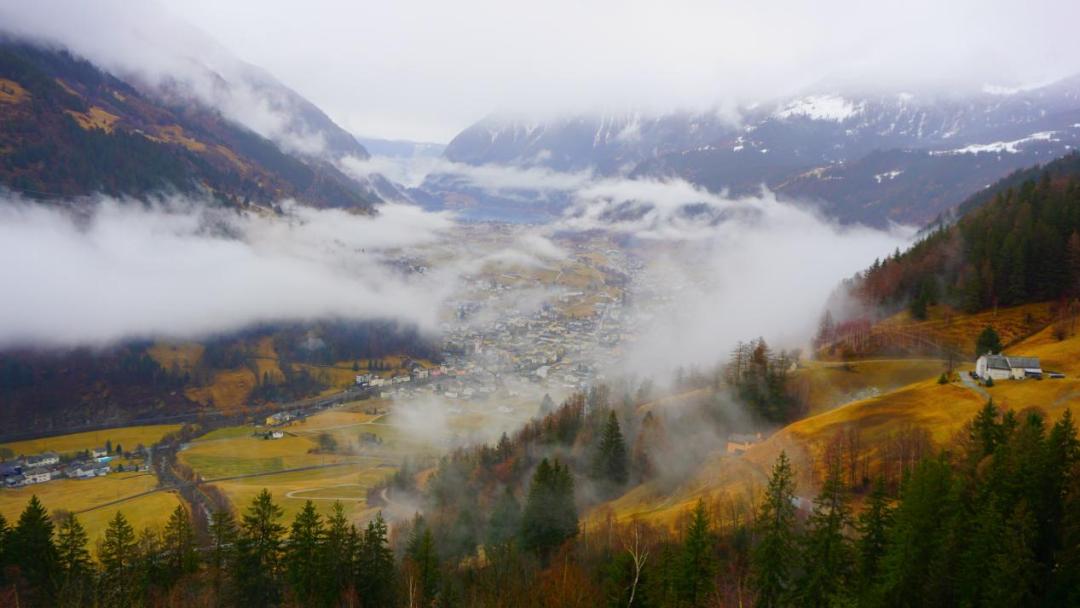
△ The beautiful scenery of the Swiss town. (Photo/photo by Yu Yutao)

What these residents came to buy was not any special items, but some simple necessities. According to a survey conducted by the German Chamber of Commerce and Industry, Swiss demand for shampoo and shower gel ranks first all the year round. Here, supermarkets specializing in selling sanitary washing products have opened one after another.

If you catch up with "Black Friday" or around Christmas, you can see the spectacular scene of a sea of people and collective passion consumption, which is no less than any top-stream scenic spot in China.

Even if the income is rich, the Swiss are used to living frugally-they always bring their own shopping bags when they go shopping in the supermarket and always have water bottles when they go out.

When friends communicate with each other, most of them will only send a box of chocolate or a bottle of wine or some flowers. If you give a picture album, it is already an "unusual" gift.

Even if guests are invited to be guests at home, the host family will never set out rich dishes, but "measure the belly to cook." Their purpose of hospitality is: it is better to eat seven points full and never leave food.

△ Friends bake firewood pizza at home. (Photo/vision china)

If it’s not enough to eat, at most, cook some macaroni temporarily and serve it with simple sauce. In the end, everyone should not only scrape the leftovers off the plate with bread, but also lick the plate clean. Only in this way can we be worthy of being a real Swiss.

No matter how exquisite the middle-class activities are in Switzerland, they have to be honest and simple. Swiss people who love hiking every day often call themselves "mountain people in the Alps". In order to save money, hikers often carry a big bag of sausages with them. When they are hungry, they will burn wood for a fire at a nearby barbecue spot, eat a few sticks, and then continue on their way.
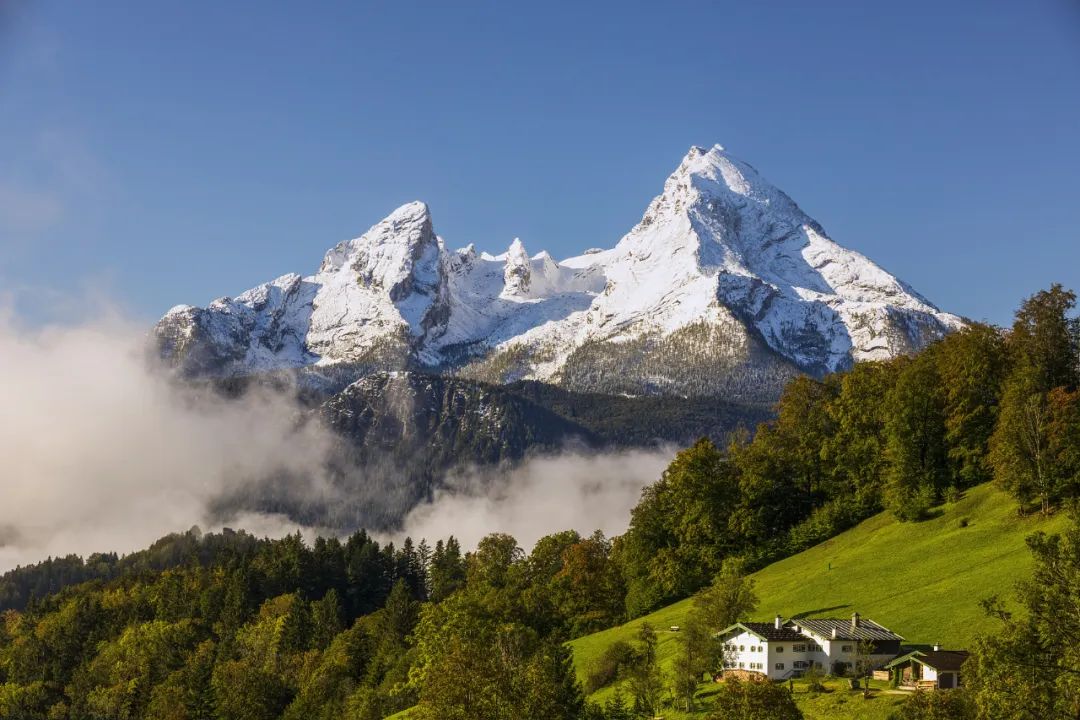
△ Swiss Alps. (Photo/vision china)

The ubiquitous "stingy" style of Swiss nationals has made the government have to play an extremely spirit and be careful everywhere. For the construction of any public works, the Swiss are based on the principle of practicality, and they can save no more money. For those icing on the cake, the Swiss are completely dismissive.

In 2007, the city government of Basel planned to renovate the old concert hall in the city center. However, after the renovation plan was announced, it immediately met with a flood of opposition from the public for the simple reason that the new concert hall was "too big and too expensive".

In Switzerland,

Only then did I know that I couldn’t afford to eat.

Before I set out, I specially asked my friends who had visited Switzerland: What delicious food is there worth recommending? The result was unexpected, and most people couldn’t answer it.

Because it’s good enough to eat here. Want to eat better? That price is really unthinkable. It seems that the "gourmets" who are good at discovering food have come to Switzerland, and there is nothing they can do.

Although fondue cheese is known as the "national dish" of Switzerland, in fact, even many Swiss themselves feel that this dish is simply not worth mentioning in the food industry.
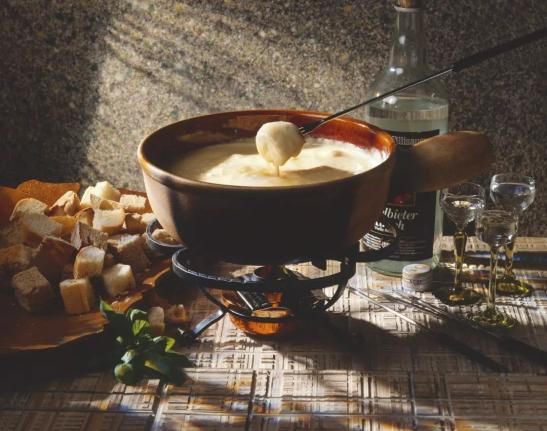
△ Cheese fondue with bread and gin. (Photo/vision china)

There are no precious ingredients in it, and there is no special practice. It just cooks cheese with white wine, garlic, ginger and pepper in a pot to make a rich cheese sauce and dip it in small pieces of bread. A little more extravagant is to serve it with sausage and French bread or lettuce.

When you just eat it, you will find it novel and interesting, but you will get tired of eating two more. After getting used to China’s hot pot, try Swiss hot pot again, and you can only say to yourself: So this can also be called hot pot?

In addition to cheese, there is also water paid by the restaurant with dry bread. Don’t think that as in China, a waiter will bring a pot of boiling tea as soon as you sit down.

Whether it is bottled water or sparkling water here, even if you just want to drink a glass of tap water, you must be prepared to pay for it. At this time, I can only comfort myself: "There is no way, rice must always be eaten, and money must be used sparingly."
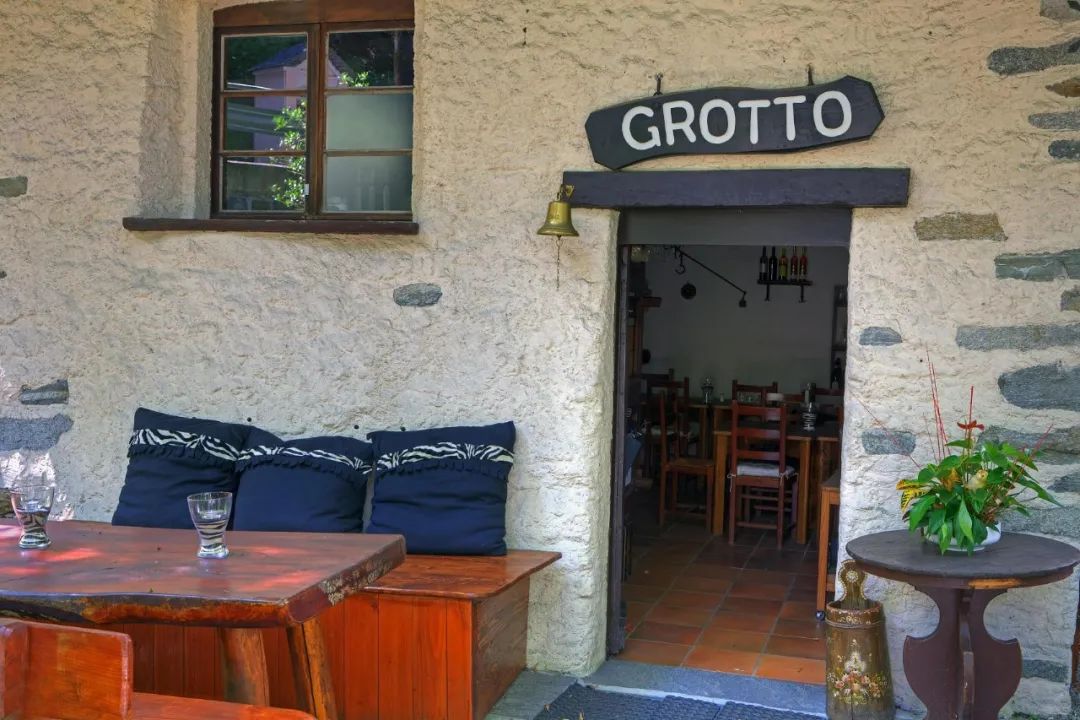
△ Ticino Cave Garden Restaurant. (Photo/vision china)

Getting into the supermarket to solve the problem of eating has become the most economical way for tourists in Switzerland. Of course, every Chinese who has traveled in Switzerland will never forget the online celebrity roast chicken in the local supermarket, which is almost the "savior" of China’s stomach.

Although its taste is mediocre and its meat is meaty, it is rare in Switzerland to meet the taste of China population, and the price is only 5-6 Swiss francs (about equal to 50 yuan RMB), so it is hard for me to find anything wrong with it.
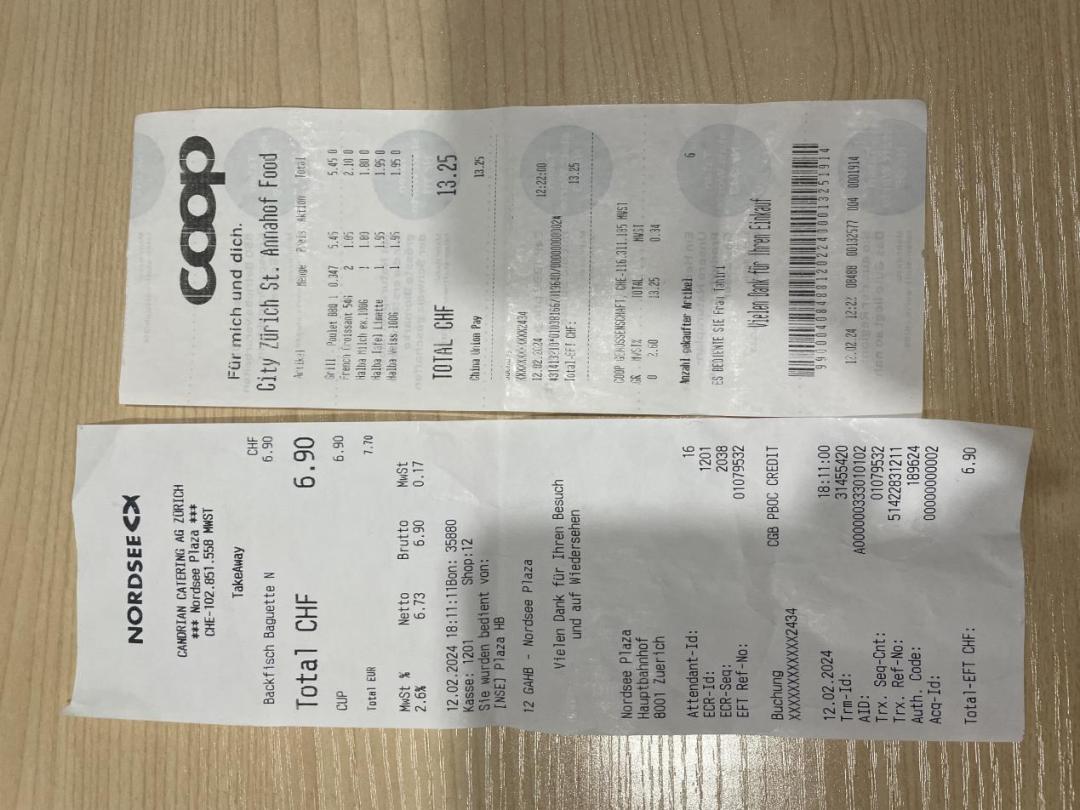
△ It costs 6.9 francs (approximately equivalent to 57 yuan RMB) to buy an ordinary cod bag locally in Switzerland, while the roast chicken in the supermarket is only 5.45 francs (approximately equivalent to 45 yuan RMB). (Photo/photo by Yu Yutao)

During our few days in Switzerland, we ate almost all the chicken legs and wings. So that after returning to China for a period of time, I couldn’t help shivering when I saw the chicken.

If you really want to improve your food, it may be the best and most affordable choice to find a fast food restaurant like McDonald’s or Burger King, although it will cost nearly 100 yuan to eat a basic set meal.

So that when I saw the "poor people’s meal" with a price of nearly three figures, I could only silently tell myself: "Switzerland is very good, save money and come back!"
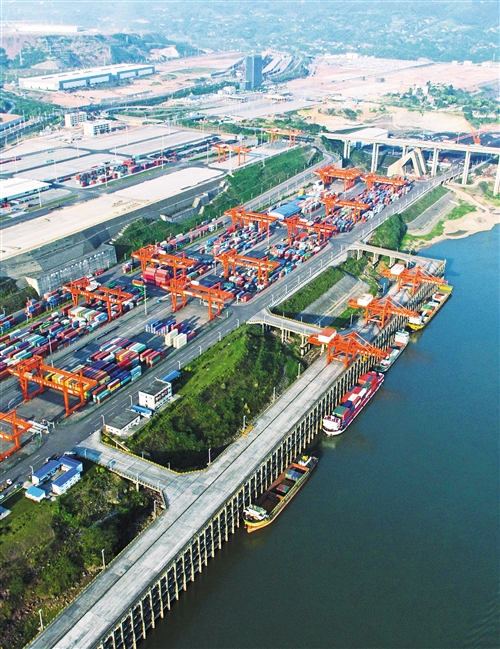
Constructing a comprehensive three-dimensional traffic corridor in the Yangtze River Economic Belt, multimodal transport and expanding the "width" of the Yangtze River

  The picture shows Chongqing Orchard Port, the China-Europe International Freight Corridor and the Yangtze River Golden Waterway are "seamlessly connected". Xinhua News Agency reporter Liu Yushe

  The provinces and cities along the Yangtze River Economic Belt have further deepened the information exchange and business cooperation among shipping, port and cargo enterprises, and promoted the development of "ship-port cargo, water-rail and door-to-door logistics" throughout the Yangtze River, which has significantly enhanced the multimodal transport function of important ports and general ports in the Yangtze River Economic Belt and realized river-sea transport, iron-water transport and public-water transport.

  In the cold winter, in Zengzhou Shipyard in Zhoushan, Zhejiang Province, a "big guy" is doing the final "dressing up" and preparing to perform a new mission. "It’s called ‘ Jianghai Zhida No.1 ’ For the first time in China, the bulk carrier manufactured by adopting the river-sea direct specification has completely changed the defects that the sea-going ships could not run into the river and the river-going ships could reach the estuary. " Li Dan, deputy general manager of Zhejiang Zengzhou Shipbuilding Co., Ltd., pointed to this "big guy" and told reporters: "In March this year, it will be officially put into operation, and container ships and tankers with the same river-sea direct function will also become their work in the near future. ‘ Little friend ’ 。”

  Zhoushan, Zhejiang Province, which is famous for its island and prospered because of its port, is located at the intersection of the North-South Maritime Passage and the Yangtze River Golden Waterway. The construction of "Jianghai Direct No.1" is only a breakthrough point for it to accelerate the construction of a comprehensive three-dimensional traffic corridor in the Yangtze River Economic Belt. In fact, the exploration of river-sea combined transport, molten iron combined transport and public water combined transport in practice is expanding the "width" of the Yangtze River.

  Jianghai Lianyun Changdayi Road

  "If the Yangtze River Economic Belt wants to develop, we must first build a logistics economic belt. In other words, logistics must be strung together, so as to promote the relevance of the whole regional construction. " According to Xu Xiaoyue, deputy director of Zhejiang Zhoushan Islands New District Management Committee and deputy mayor of Zhoushan City, the establishment of Zhoushan River-Sea Intermodal Service Center is to use the geographical advantages of Zhoushan Tongjiang and Dahai to solve the problem of river going to sea and sea entering the river, and connect the whole Yangtze River in series from Chongqing in the upper reaches, Wuhan in the middle reaches and Nanjing in the lower reaches.

  Not disappointed, with the help of the platform of Jianghai Intermodal Service Center, Zhoushan City has strengthened its docking with important ports along the Yangtze River, accelerated the strategic layout of bulk cargo along the Yangtze River, and signed cooperation agreements with Wuhan Intermodal Exchange, Maanshan Iron and Steel Group and Changhang Ro-Ro. Negotiate and dock with Wuhan Xingang Committee, China Airlines Company under Wuhan Port Development Investment and Wuhan Institute of Technology on the container project of river-sea combined transport; Reached a cooperation with Chongqing Port Group on river-sea combined transport of iron ore, containers and cold chain & HELIP; … The "gold content" of the golden waterway of the Yangtze River is constantly improving.

  Now, by clicking on Zhoushan’s public information platform of river-sea combined transport, we can see that the goods coming from "the sea" are rapidly "swimming" in the Yangtze River basin. The bulk carrier Runguang No.3, which started from the 20,000-ton unloading expansion terminal of Laotangshan Phase III and loaded with nearly 15,000 tons of soybeans, left Hong Kong at 11: 00 on January 22 and headed for Taizhou, Jiangsu. The bulk carrier "Baohang No.18", which loaded 50,000 tons of iron ore at No.5 berth in Majishan Port Area of Baosteel Phase II, also had a big belly, and sailed for the destination port of Nanjing &hellip from 10: 00 on January 21st. … The data shows that in 2017, the combined transport volume of the Yangtze River and the sea is expected to reach 1.41 billion tons, accounting for about 56% of the cargo throughput of the Yangtze River trunk line.

  Of course, there is still potential to tap the river-sea combined transport, a 20,000-ton big guy — — "Jianghai Direct No.1" is one of the potential points. "The tonnage of inland ships in the Yangtze River is generally below 10,000 tons, with a flat bottom and shallow draft, which is not stable enough after entering the sea; Because of the bridge design and deep draft, seagoing ships can’t enter the river. This means that it will take two times to load and unload during transportation, which is not only time-consuming, but also the goods will be damaged. Jianghai direct ships only need to be loaded and unloaded once, which greatly improves the transportation efficiency and reduces the logistics cost. One ton can save twenty or thirty yuan. " The account calculated by Suo Xudong, deputy director of Zhoushan Port and Shipping Administration Bureau of Zhejiang Province, shows that the smoothness of river-sea combined transport is worth looking forward to.

  Land-sea linkage is once again deep

  On December 25, 2009, Zhoushan Sea-crossing Bridge was opened to traffic on this day. Since then, Zhoushan has been "bordering" with the mainland all the way to the west, ending the history of being alone at sea. The huge photos in the urban exhibition hall of Zhoushan Archipelago New Area in Zhejiang Province "collect" five sea-crossing bridges, namely cengang, Xiangjiaomen, Taoyaomen, Xihoumen and Jintang, which are full of inexhaustible momentum.

  Nowadays, on the coast of the East China Sea, piers stand on the sea, and there is another "sea passage" — — The main passage of Zhoushan Port in Ningbo is slowly spreading out. The starting point of the main channel is Fuchi Island, which connects the existing Ningbo-Zhoushan Expressway. After crossing the Fuchimen Waterway, the Fuqimen Bridge is connected with the south side of cengang Zengci Village, and then journey to the south crosses Zhoushan Island and enters the sea again. Daishan Cross-sea Bridge takes the "hands" of Zhoushan Island and Daishan Island, and finally reaches Yushan Island through Yushan Bridge. "Each of these bridges has its own special mission." Yu Shubo, director of the Development and Reform Commission of Zhoushan City, Zhejiang Province, said with emotion.

  The Fuchimen Bridge, which is scheduled to be completed by the end of this year and opened to traffic in June next year, will effectively divert the flow of the Yongzhou Expressway and deepen the land-sea linkage. At present, the prototype has appeared; The Daishan Cross-sea Bridge, which is expected to be completed and opened to traffic in 2021, is the "dream messenger" of Daishan people. In the past, Daishan people were always trapped on the island by wind, waves and fog for nearly 50 days every year, and it is more common to queue up at ferry terminals on holidays. The construction of Daishan Cross-sea Bridge has changed this situation; Yushan Bridge is a branch line of the main channel project of Zhoushan Port in Ningbo. It is planned to be completed and opened to traffic by the end of this year, and it will become the only land channel connecting Zhoushan International Green Petrochemical Base.

  Some experts pointed out that the construction of the main channel will greatly optimize the land transportation system between Zhoushan Port in Ningbo and the Yiwu-Ningbo open channel, and turn Zhoushan into a transportation hub from the traffic terminal, which is of great significance for further improving the location conditions of Zhoushan Islands New District, driving the construction of the core port area of river-sea combined transport and supporting major industries, promoting the integration of Zhoushan Port in Ningbo, and realizing port linkage, port-city linkage and land-sea overall planning.

  In the long run, this is a longer "parabola": from the main passage of Zhoushan Port in Ningbo to the north, connecting Yangshan and finally connecting with Shanghai. By then, Shanghai Port and Ningbo Zhoushan Port will be integrated into one, forming an annular road network along the eastern coast of the Yangtze River Delta region, which will make the market radiation range of the Yangtze River Basin wider.

  Two-way opening goes further.

  A series of actions of Zhoushan, the "dragon head", have a heart along the Yangtze River. Huangshi New Port is connected by multimodal transport of hot metal and water, and the seamless connection of public, iron and water infrastructure has been realized, and the radiation capacity of the port has expanded from about 100 kilometers in general to more than 1000 kilometers along the railway line; The container freight train of "COSCO Shipping" is full of goods and leaves from the station of the first phase of Yangluo Port’s iron-water combined transport project. The whole transportation time is about 7 days shorter than that of the traditional all-water mode. At present, through the construction of a comprehensive three-dimensional traffic corridor along the river, the development of hot metal, public water and river-sea combined transport has become a hot spot, and it is the focus.

  What’s good about multimodal transport? This has to find the answer from Wen Xinxiang, deputy director of the Yangtze River Navigation Administration Bureau of the Ministry of Transport. It is reported that Xinxiang said that in terms of transportation capacity, a 5000-ton ship is equivalent to 100 cars and 100 railway wagons. If the general ledger is calculated, the annual freight volume of the Yangtze River trunk line is equivalent to about 70% of the national railway freight volume; In terms of cost, water transportation is only about 1 minute and 5 cents per ton-kilometer, the railway is close to 0.3 yuan, and the highway is the highest to 1.1 yuan. "That is to say, the price of tons of kilometers of water transportation is cents, the price of railways is cents, and the price of highways is yuan yuan. The difference is still very big." Not only that, in terms of energy consumption and emissions, water transport is much smaller and lower than roads and railways. It is self-evident that it is necessary to vigorously build the golden waterway of the Yangtze River and attract more suitable water sources to transfer to waterways.

  However, if you are happy to see the advantages, you must find the problems clearly. At present, most of the multimodal transport in the Yangtze River basin still stays in the simple superposition of transport segments, and the "linkage" of transport organizations in documents, dispatching and business connection is still very lacking. The development model of multimodal transport in the Yangtze River Economic Belt needs to be innovated urgently. After finding the problem, we should start to solve it. At the end of last year, the Yangtze River Port and Shipping Logistics Alliance Full-course Logistics Professional Committee was established in Wuhan, aiming at further deepening the information exchange and business cooperation between shipping, port and cargo enterprises, promoting the development of "ship-port cargo, water and rail, door-to-door" full-course logistics in the Yangtze River, and significantly enhancing the multimodal transport function of important ports and general ports in the Yangtze River Economic Belt, which is a "prescription".

  Multimodal transport makes the Yangtze River change from one-way opening in the West and Middle East to two-way opening, connecting the inland and the world, and it will face a broader and more dynamic market. (Economic Daily China Economic Net reporter Niu Wei)