Revealing the Origin of the Story "Shanghai Fortress" Exposes the Special Edition of "Instructions for Entering the Fortress"
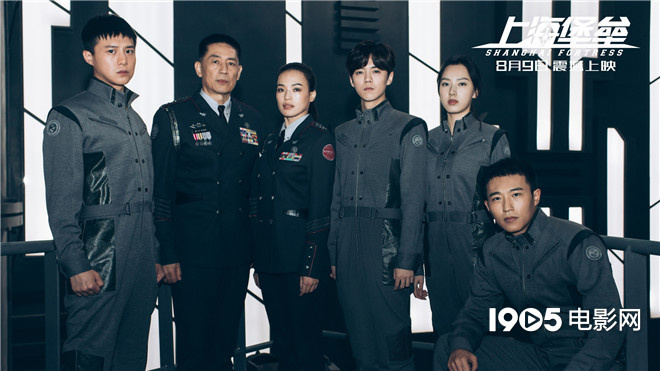
1905 movie network news Directed by Huatao Teng and adapted from a novel of the same name in Jiangnan, a sci-fi war movie starring Lu Han and Shu Qi, Shi Liang, Godfrey Tsao, Kid Young, Wilson and Jialing Sun will be released on August 9th. Recently, in the advance premiere of the film, the strong sense of substitution against alien civilization in Shanghai has ignited the audience, and the shocking scenes such as "Shanghai Cannon" and "Shanghai Land Sinking" have also become the focus of the film, attracting countless eyes. Some viewers expressed their feelings: "Seeing a familiar city become a sci-fi battlefield, I don’t know how many China sci-fi fans are looking forward to it. Now this vision has finally come true."

Today, the film exposed the special edition of "How to Enter the Castle", revealing the story origin of this future war. In the future world, when people are in Ad Astra, they will bring the super energy substance "Xianteng" back to the earth as the main energy source. Subsequently, the alien mother ship came to the earth with predators, which started a predatory war against "Xianteng", and human beings also used "Xianteng" to build a "bubble defense system" to resist invasion. After other cities were hit hard one after another, Shanghai, China became the last city fortress and the last hope of human civilization.

 

Six-year long March, making a China science fiction movie.

Director Huatao Teng: Three years to polish the conceptual design.


Shanghai Fortress, a novel written by Jiangnan, has accumulated countless readers’ youthful memories in ten years. When domestic sci-fi movies have not entered the audience’s field of vision, it is doomed to be a huge project and full of unknown difficulties to choose to put this story of future war and delicate emotions on the movie screen from the beginning of the project. It takes six years to make a sci-fi movie. In the view of director Huatao Teng, the setting of world outlook and the conceptual design of prop scenes are the most important links.

Why do alien motherships look like this, what is their attack mode, and what is our defense mode … … With these problems, Teng Dao kept meeting with the team in the preparatory stage and polished and revised it repeatedly. Because there is no domestic film experience to learn from, Teng Dao said frankly: "It took more than three years to get a basic introduction to the concept lesson." By the time of official shooting, each actor not only knew the world described by the director, but also got a manual, which recorded the description of each scene and the usage of each prop.


The "Shanghai battlefield" big scene was praised.

Audience: "The first feeling is shock."


"Shocking", "being there" and "burning" … … At the advanced premiere of the film "Shanghai Fortress", these carefully crafted sci-fi scenes were also well received and recognized by the audience. The huge alien carrier landed on the earth, and the Shanghai cannon jumped out of the Huangpu River and fired, exchanging the whole city of Shanghai "Lu Chen" for hope. All kinds of big scenes that happened in China for the first time were eye-catching. Some viewers concluded that the first feeling after watching the movie was shock.

For this new exploration of China’s sci-fi, some viewers commented: "The sci-fi war film with Shanghai, China as the main battlefield has restored the big scenes in the original, the special effects are very realistic, and the film production showing Shanghai Lu Shen is even more excellent." Some viewers also said: "The degree of completion is quite good. From the visual effect, the dome-like bubble defense and every fierce battle between human beings and alien civilizations are highlights."


The film "Shanghai Fortress" will be released on August 9th.
The largest range of rain and snow weather since winter, the rainy weather in the south will last for a week.

  Xinhua News Agency, Beijing, February 14th Question: The largest range of rain and snow weather since winter. The rainy weather in the south will continue for a week.

  Xinhua News Agency reporter Gao Jing, Hu Lu

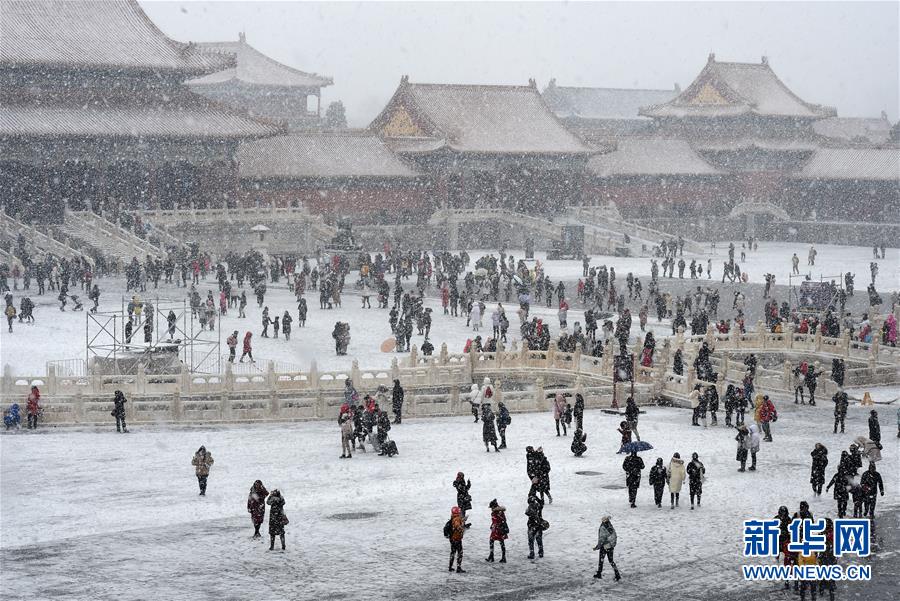
  On February 14th, tourists visited the Forbidden City in Beijing in the snow. On that day, it snowed in Beijing, and a large number of tourists came to the Forbidden City to enjoy the snow. Xinhua News Agency reporter Luo Xiaoguang photo

  Snowflakes are fluttering in the north and rainy in the south. On the 14th, the largest range of rain and snow weather since winter came online. What is the reason for the rain and snow? What will the weather be like in the future? The reporter interviewed relevant experts.

  The snowfall in the north has a large impact range and strong intensity.

  Fang Yi, chief forecaster of the Central Meteorological Observatory, said that around the 14th, the snowfall in the north was generally characterized by a large impact range and strong intensity, which was the largest and strongest snowfall in North China since winter. There are small to medium snow or sleet in central Inner Mongolia, Hebei, Beijing, Tianjin, Henan and other places, which gradually weakens after nightfall that day. Snowfall in Liaoning, Shandong and eastern Inner Mongolia will last until the morning or day of the 15th.

  Just two days ago, the snowfall on the 12 th has already surprised many small partners in the north. It is also snowing, but the snow on the 14th is somewhat different from that of the previous days.

  Fang Yi pointed out that the difference between the two snowfall processes lies in the different sources of cold air and water vapor. This round of snowfall is due to the continuous eastward movement of cold air in northern Xinjiang and southward along the northwest road. Before the influence of cold air, the ground inverted trough and the low-level southerly wind were significantly strengthened, which transported the warm and humid airflow from the south to the north, which was beneficial to the formation of snowfall in Huanghuai area of North China. On the 12th, the snowfall process was mainly caused by the return of cold air from the East Road. In addition, there was an easterly wind in Bohai Sea to transport water vapor, which led to snowfall in Huanghuai area of North China.

  Strictly speaking, the snow on the 14th was the third snowfall in Beijing recently. Not only that, since February, there has been obvious snowfall in many places in the north, including Beijing.

  Chen Lijuan, chief of the Climate Prediction Office of the National Climate Center, said that the precipitation situation is closely related to the coordination of cold air activities, water vapor transport and other conditions. In February, there were two strong cold air processes affecting China. At the same time, the subtropical high in the western Pacific is stronger than normal, and it is north by west, which leads a lot of water vapor from the northwest Pacific and the South China Sea to be transported to China, especially to the north of the Yangtze River, where it merges with the cold air guided by the trough from Mongolia to Northeast Asia, forming favorable conditions for precipitation in the north. Because the temperature is obviously lower than normal, it appears in the form of snowfall.

  The continuous rain in the south has lasted for a week.

  Since February 7th, there has been continuous rainy weather in southern China for one week. Fang Yi said that due to the strong and stable subtropical high, the south branch trough is more active, the low trough keeps moving eastward, and the warm and humid airflow is strong, resulting in continuous rainy weather in the south.

  He said that in the coming week, there will be continuous rainy weather in Jiangnan, South China, Jianghuai, Jianghan, Chongqing and Guizhou. In particular, it should be noted that from 17th to 18th, heavy rain may occur in parts of central and western South China and central and western South China, and the possible secondary disasters should be prevented in time.

  Fang Yi pointed out that for the northern region, Xinjiang, Tibet, Qinghai and other places will have small to medium snow, local heavy snow or blizzard from 14th to 16th. Around the 18th, there will be a snowfall mainly with light snow in south-central North China, Huanghuai and other places, and moderate to heavy snow may occur in some areas of Huanghuai.

  Chen Lijuan said that from December 1, 2018 to February 13, 2019, the national precipitation was 29% higher than the normal average, but the spatial distribution was extremely uneven. The eastern region was "less in the north and south, more in the middle", that is, less in the northeast, north China and eastern South China, but more in Jianghuai and Jiangnan, and more in the western region as a whole.

  Ruixue is a good year, especially for the northern region. Because of less precipitation in the early stage, snowfall is very beneficial to alleviate drought and agricultural production. However, the continuous rainy weather in the southern region will affect the growth of crops to a certain extent.

  The global climate is closely related, and El Ni? o "adds fuel to the fire"

  Looking around the world, not only has there been precipitation in many places in China recently, but there have also been frequent snowstorms in Europe and the United States.

  Chen Lijuan pointed out that Europe, influenced by the Atlantic warm current, belongs to a temperate maritime climate, and the water vapor conditions are still abundant in winter, which is favorable for precipitation. If cold air from the polar regions moves southward, it is easy to form snowfall. Influenced by the water vapor transport conditions in the western Atlantic Ocean and the eastern Pacific Ocean, the United States is also prone to heavy snowfall when it encounters strong cold air activities. From January 26 to 30, the polar vortex invaded the United States southward, and two-thirds of the United States suffered from extremely cold weather, and the temperature dropped to the lowest in many years.

  She said that from the global climate background, since September 2018, the tropical Middle East Pacific has entered an El Ni? o state, which will form an El Ni? o event, which is conducive to transporting more tropical ocean water vapor to the southern United States. El Nino event has no direct contribution to the cold wave in North America, but when the cold wave occurs, if more water vapor is transported to the mainland of the United States, it will easily lead to heavy snowfall, thus aggravating the disaster and influence of cold wave activities.

  At the same time, when El Ni? o occurs, it is beneficial to transport more water vapor from the western Pacific Ocean and the South China Sea to China’s land areas, creating conditions for precipitation in the eastern part of China, and cooperating with the process and intensity of cold air activity in the middle and high latitudes, causing rainfall or snowfall in different parts of China.